


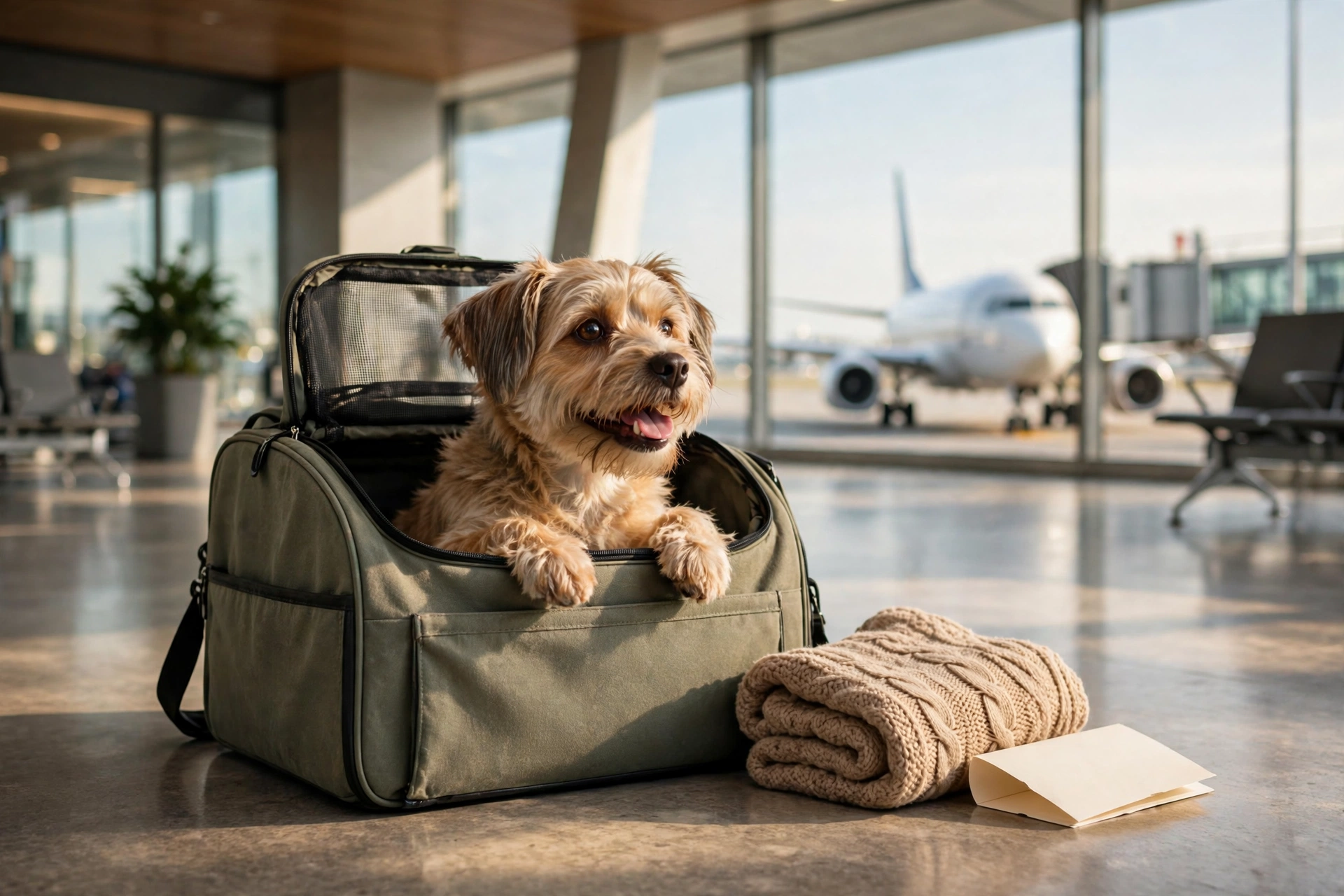
You are standing at the departure gate, boarding pass in one hand and a soft carrier at your feet. Inside it, your dog is watching the world go by — or your cat is pretending the world does not exist. You have checked your own bag, your ID, and your seat three times, but the question nagging you is different: is your pet actually ready for this flight? Flying with a pet for the first time is mostly a matter of preparation. Get the airline rules, the carrier, the paperwork, and the airport routine right before travel day, and the flight itself becomes the easy part.
Decide How Your Pet Will Fly: Cabin or Cargo
Most small dogs and cats can fly in the cabin, tucked in a carrier under the seat in front of you. Larger pets usually travel as checked baggage or cargo, in a ventilated crate in the aircraft hold. Which option applies depends on your pet’s size and your airline’s rules — and the rules are not the same everywhere, so always check your airline’s own pet page before you book.
Book your pet’s spot as early as you can. Airlines limit the number of pets allowed in the cabin on each flight, and those spots fill up, especially on popular routes and around holidays. A pet fee usually applies, and it varies by airline and route, so confirm the cost when you book rather than discovering it at check-in. Some airlines only let you add a pet by phone or at the airport, so do not assume the booking website will handle it. Where you can, choose a direct flight: fewer takeoffs and landings, and no risk of a missed connection with your pet in the hold.
Pick the Right Carrier — and Let Your Pet Practice
The carrier is the single most important piece of gear. For the cabin, a soft-sided carrier is usually the best choice because it flexes to fit under the seat. For cargo travel, airlines require a hard-sided crate. Either way, the carrier must be big enough for your pet to stand up, sit, and turn around comfortably — and small enough to meet your airline’s size limit. Measure your pet and check the airline’s maximum carrier dimensions before you buy; sizes vary between airlines.
Do not let travel day be the first time your pet meets the carrier. Set it up at home a week or two before the trip, leave the door open with a familiar blanket inside, and let your pet explore it. Offer treats inside, try short sessions with the door closed, then a short car ride. A pet that already sees the carrier as a safe place will be far calmer at the airport.
Sort Out the Vet Visit and Paperwork Early
Book a vet visit a few weeks before you fly. Your pet’s vaccinations should be up to date, and the vet can confirm your pet is fit to fly — especially important for older pets, brachycephalic (flat-faced) breeds, and pets with breathing or heart conditions, which some airlines restrict.
Many airlines ask for a health certificate from your vet, often issued within 10 days of travel — but the exact window differs, so confirm your airline’s requirement and time the appointment accordingly. Carry the certificate in paper and on your phone, along with vaccination records and a recent photo of your pet.
International trips need extra homework. Every destination has its own entry rules, and some require specific vaccinations, blood tests, or waiting periods, so check the destination country’s requirements well in advance. If you are flying a dog into the United States, the CDC requires a CDC Dog Import Form receipt, a microchip readable by a universal scanner, and a minimum age of six months, and the dog must appear healthy on arrival — see the CDC’s dog importation FAQs for the full requirements. Cats do not need rabies documentation for CDC entry. Rules change, so verify the current version shortly before you travel.
Getting Through Airport Security With Your Pet
Airport security is the part first-time pet flyers worry about most, and it is straightforward once you know the routine. Arrive earlier than you would without a pet — the extra time takes the pressure off both of you.
At the checkpoint, you take your pet out of the carrier and send the empty carrier through the X-ray machine. You then carry your pet — or walk them on a leash — through the metal detector. Never place your pet in the X-ray tunnel; it is for luggage only. An officer may swab your hands afterwards, and your carrier may get a visual inspection. Once you are through, put your pet back in the carrier in the recomposure area, away from the checkpoint. The TSA’s small-pets page sets out the official procedure.
If your pet is nervous or likely to bolt when the carrier opens, ask an officer for a private screening room before you unzip anything — a normal request, and far safer than wrestling a frightened cat in a busy security lane. Use a snug harness so your pet cannot slip free, and find the airport’s pet relief area before boarding.
Keeping Your Pet Calm During the Flight
On the plane, your pet stays in the carrier under the seat in front of you for takeoff, landing, and usually the whole flight. Do not open the carrier mid-flight to comfort them — a loose pet in a cabin is a safety problem, and most airlines forbid it.
A tired pet is a calm pet. Give your dog a good walk or your cat a play session before you leave for the airport so some energy is already spent. Feed a light meal a few hours before departure rather than right before the flight, and offer a little water. Put a familiar blanket or an item of your clothing in the carrier; your scent is reassuring.
Do not sedate your pet for a flight unless your vet specifically advises it — sedatives can affect breathing and balance at altitude. If your pet is very anxious, talk to your vet well ahead of the trip about safer options, such as calming pheromone sprays.
After You Land: The First Hour Matters
Once you are off the plane, head for the nearest pet relief area, offer water, and give your pet a few quiet minutes to recover before the next leg of the journey. Watch for signs of stress — heavy panting, drooling, or refusal to eat — and let your pet rest if the trip was long.
If your trip includes an overnight stay, confirm the hotel’s pet rules before you book, including size limits, fees, and whether pets can be left alone in the room. Our Candlewood Suites pet policy guide shows what one hotel chain allows pet travelers — a useful example of the questions to ask any hotel.
FAQ: Flying With a Pet for the First Time
Can I take my pet out of the carrier during the flight?
No. On almost every airline, your pet must stay in the carrier under the seat for the whole flight. Check your airline’s rules, but plan on keeping the carrier closed from boarding to arrival.
How much does it cost to fly with a pet?
It varies widely. In-cabin fees differ by airline and route, and cargo fees are usually higher, depending on size and distance. Confirm the exact fee when you book — and whether it is charged per flight segment.
What if my pet gets anxious at the airport?
Preparation is the best fix: practice with the carrier at home, tire your pet out before the flight, and arrive early so nothing is rushed. At security, ask for a private screening room if your pet may bolt. If anxiety is severe, speak to your vet before the trip rather than on travel day.
Final Thoughts
Flying with a pet for the first time feels complicated, but it comes down to four things: the airline’s rules, a carrier your pet already trusts, paperwork sorted early, and a calm airport routine. Do those four well and the flight is just a few hours in a familiar little den under your seat.