


Picture coming home after a long day to a kitchen where everything works the way you need it to — counters at a comfortable height, light falling where you actually cook, and storage that does not fight you every morning. Or a bathroom that feels calm instead of cramped. That is what a good home improvement service in Baldwin is really selling: not new cabinets or fresh paint, but a home that fits the way you live.
But a renovation is also one of the biggest cheques most homeowners ever write, and the difference between a project you love and one you regret usually comes down to planning — choosing the right contractor, scoping the work honestly, and knowing which upgrades are worth the money. This guide walks through all three.
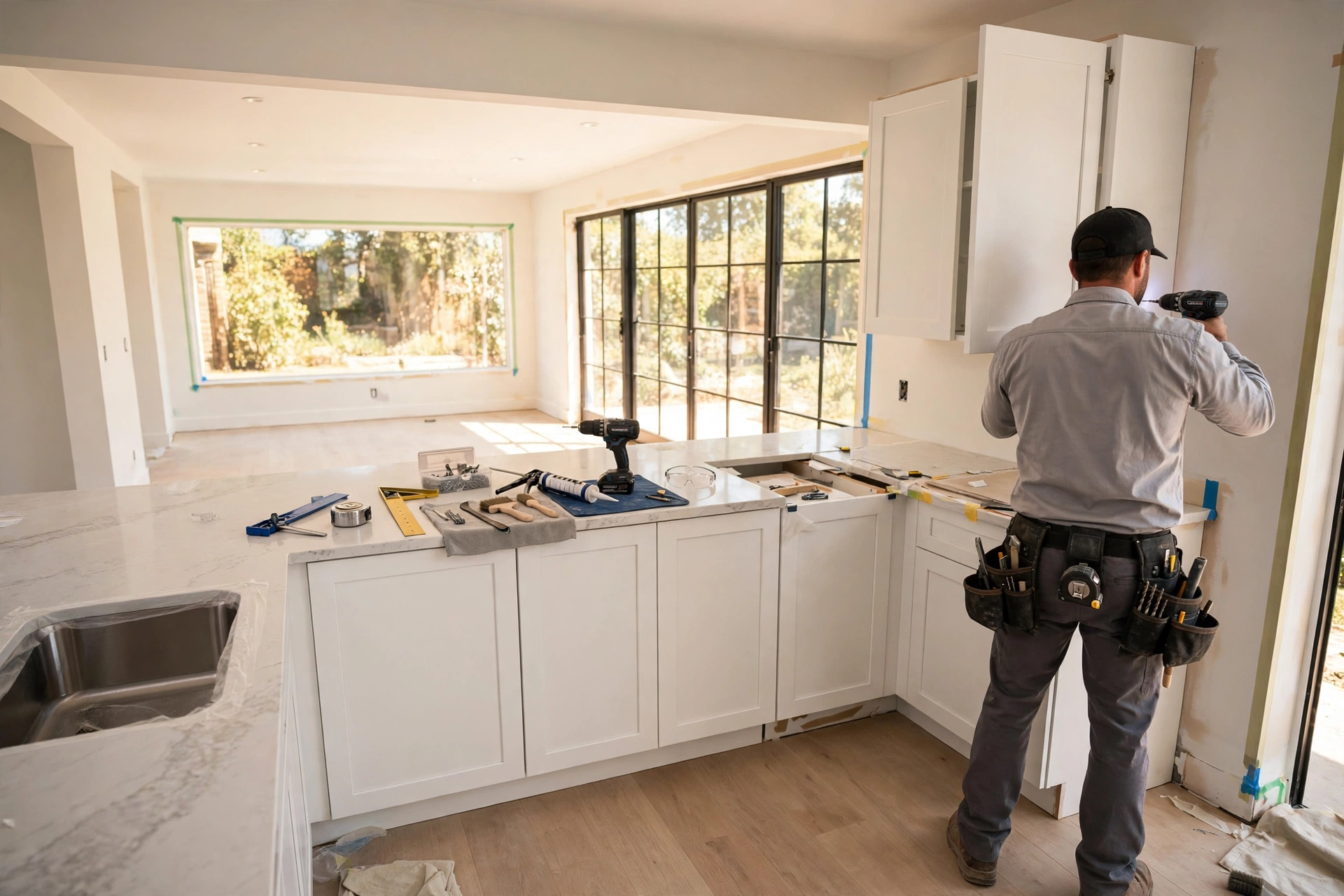
What a Home Improvement Service in Baldwin Actually Covers
A home improvement service handles the work that changes how your home looks, works, and holds its value. In practice, that usually means kitchen and bathroom remodels, flooring, interior and exterior painting, drywall and trim, decks and porches, basement finishing, roofing and siding repairs, and energy-efficiency upgrades such as insulation and new windows.
Some companies are full-service, managing design, permits, and every trade under one contract, while others specialise in one area — a kitchen firm, a roofing crew, a painting team. Neither model is automatically better. A full-service home improvement company can be simpler to manage for a whole-house project, while a specialist may be the sharper choice for a single, well-defined job such as a bathroom refit. What matters is that the scope of work is written down clearly before anyone starts, so you and the contractor agree on exactly what is included — and what is not.
How to Choose the Right Contractor in Baldwin
Start by checking the basics. Ask any contractor you consider whether they are licensed and insured for the work you need, and verify it with the relevant local authority rather than taking a business card at face value — licensing rules vary by locality, so the check that matters is the one for your area. A legitimate contractor will expect the question and will not rush you past it.
Then get two or three written, itemised quotes for the same scope of work, so you are comparing like with like. A quote that is far cheaper than the others is rarely a bargain; it usually means something has been left out, or corners are planned. Ask for references from recent local jobs and, if you can, look at finished work in person. Pay attention to how the contractor communicates: clear answers, a realistic timeline, and a written contract are worth more than a friendly sales pitch.
Finally, agree on a payment schedule tied to completed stages of work, and be wary of anyone who asks for the full amount upfront. Permits are another good test — a contractor who suggests skipping a required permit is telling you how they handle rules, and it is not a corner worth cutting.
Kitchen and Bathroom Updates That Matter Most
Kitchens and bathrooms are where homeowners spend the most renovation money, and where buyers look first — but the upgrades that pay off are usually the practical ones, not the flashiest. In a kitchen, that means layout before finishes: enough counter space where you prep, storage you can reach without a step stool, good task lighting, and ventilation that actually clears cooking steam. In a bathroom, it means reliable waterproofing, decent lighting, and storage that keeps the room usable day to day.
Before you fall in love with a particular look, browse finished-room photos, like these Midtown home improvement photos, to pin down a style you will still like in five years. Trendy finishes date quickly; solid layout and good materials do not.
On resale value, be honest with yourself: a well-done kitchen or bathroom update can make a home far more appealing to buyers, but how much value it adds depends on your local market, the scope of the work, and the quality of the finish. No renovation guarantees a return, so check recent comparable sales in your area before budgeting on resale value alone — and choose the project because it improves your daily life, not only because of what it might be worth later.
Energy-Efficient Upgrades Worth Considering
Energy upgrades rarely make a dramatic before-and-after photo, but they change your monthly bills and how comfortable the house feels. The most useful starting points are usually air sealing and insulation in the attic and walls, which cut the heating and cooling loss that most homes suffer silently. After that, consider efficient windows where old ones draught, LED lighting throughout, a programmable or smart thermostat, and an efficient water heater when the old one is due for replacement.
Savings vary a lot by house, climate, and how the work is done, so treat any promised payback period with caution. It is also worth checking whether your utility or local government offers rebates or incentives for insulation, heat pumps, or efficient windows — programmes change often, so confirm what is currently available before you commit to a purchase.
Planning Your Project Step by Step
A smooth renovation follows a simple order. First, define what you actually want: the problem you are solving, the rooms involved, and the must-haves versus the nice-to-haves. Second, set a budget that includes a contingency buffer for the surprises that hide behind walls and under floors — older homes almost always produce at least one.
Third, get your written quotes, check references, and sign a contract that spells out the scope, materials, timeline, payment stages, and how changes will be handled. Fourth, sort out permits and any approvals before work begins. And fifth, plan for living through the project: a kitchen remodel means weeks without a working kitchen, so agree on dust protection, working hours, and where tools and materials will be stored.
That written scope is your best protection. If it is not in the contract, assume it is not included — and get any change agreed in writing, with its cost, before the work happens.
Mistakes That Cost Homeowners Time and Money
The most expensive mistakes are usually avoidable. Hiring the cheapest bid without checking what it leaves out. Agreeing to work on a handshake instead of a written contract. Skipping a permit and discovering the problem at sale time. Changing the design halfway through, which costs more than deciding properly at the start. And ignoring moisture and ventilation — a beautiful bathroom with poor ventilation becomes a mould problem, and a finished basement without damp-proofing becomes a repair bill.
None of these mistakes come from bad luck. They come from rushing the planning stage, and the planning stage is the cheapest part of any project.
FAQs About Home Improvement Service in Baldwin
How do I find a licensed home improvement contractor in Baldwin?
Ask for the licence number and proof of insurance, then verify both with the relevant local authority. Also check recent local references and look at finished work where possible.
How long does a typical kitchen remodel take?
It depends on the scope. A cosmetic refresh can take a couple of weeks, while a full remodel with new layout, plumbing, and electrical work often runs several weeks to a few months. Ask your contractor for a written timeline — and expect some slippage if structural surprises turn up.
Do I need a permit for my project?
It depends on the scope and local rules. Structural changes, electrical and plumbing work, and additions usually need permits, while cosmetic work often does not. Your contractor should know the local requirements, but confirm them yourself with the local building authority.
How much should I budget?
There is no single reliable figure, because costs depend on the rooms, materials, and labour in your area. Get two or three itemised written quotes for the same scope, and keep a contingency buffer for unexpected issues.
Can I stay in my home during the renovation?
Usually, yes — unless the work affects every bathroom, the kitchen, and the bedrooms at once. Talk through dust, noise, and access with your contractor before work starts, and agree on working hours.
Final Thoughts
A home improvement project in Baldwin succeeds or fails in the planning stage: a clear scope, a contractor you have actually checked, a realistic budget with room for surprises, and upgrades chosen for how you live rather than how they photograph. Get those right and the work itself becomes straightforward. Start by writing down what you want to change and why, then bring in contractors to price that exact job — and take the time to choose well, because the cheapest and fastest option is rarely the one you will be glad you picked.