

Chiang Mai greets you gently. Instead of Bangkok’s rush, you get temple bells, mountain air and a walled Old City you can explore on foot. If you are planning the top places to visit in Chiang Mai, this guide covers the temples, nature and markets that make northern Thailand’s cultural capital so easy to love — plus the practical details that make a first visit smooth.
Old City Temples and Cultural Sites
Start inside the Old City, where the moat and sections of the old wall still trace the historic centre. Wat Phra Singh is one of the city’s most revered temples, with ornate halls and a calm, working-monastery atmosphere. Nearby, Wat Chedi Luang impresses with its massive, partially ruined chedi, built centuries ago and damaged by an earthquake — its scale still dominates the square around it. Wander between temples on foot, and remember to dress modestly: cover your shoulders and knees, and remove your shoes before entering temple buildings.
Wat Phra That Doi Suthep
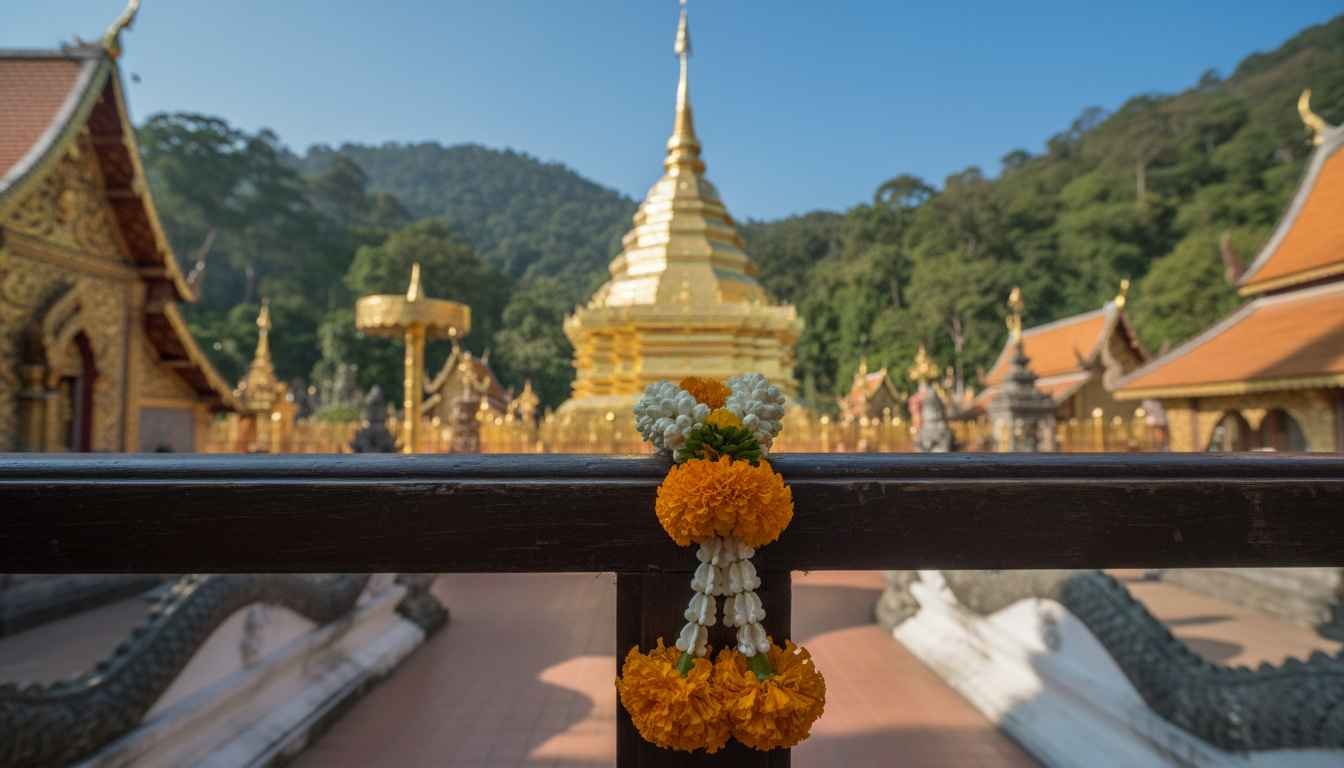
No Chiang Mai visit is complete without Doi Suthep, the golden temple on the mountain overlooking the city. Climb the long staircase lined with serpent statues, or take the funicular if you prefer, and you will reach a terrace with sweeping views over the valley below. Visit early in the morning or late in the afternoon to avoid the busiest hours, and combine the trip with the nearby Hmong village and viewpoints along the mountain road.
Natural Attractions and Parks
Chiang Mai’s surroundings are as rewarding as the city itself. Doi Inthanon National Park, home to Thailand’s highest peak, offers waterfalls, forest trails and cooler mountain air — a welcome change from the city’s heat. For wildlife, Elephant Nature Park near Chiang Mai is a well-known ethical sanctuary where visitors observe rescued elephants rather than ride them; book well ahead, as places are limited and demand is high.
Markets and Local Experiences
Chiang Mai’s markets are an experience in themselves. The Night Bazaar is the place for handicrafts, clothing and souvenirs, with food stalls and street performers adding to the evening buzz. On Sundays, the Walking Street Market closes a stretch of the Old City to traffic and fills it with local crafts, street food and live music — arrive hungry and take your time. Between market visits, try a Thai cooking class: many include a morning market tour, so you learn where ingredients come from before you cook with them.
Day Trips and Slower Days
If you have extra days, the mountain town of Pai, a few hours’ drive away, is a popular escape with hot springs, waterfalls and a famously relaxed pace. Closer to the city, the Mae Sa Valley offers gardens, waterfalls and viewpoints for an easy half-day out. Chiang Mai also suits slow travel: a meditation retreat, a massage, or simply an afternoon in a riverside café can be as memorable as any sightseeing list. Do not try to rush it — the city rewards visitors who linger.
Getting Around Chiang Mai
The Old City is compact and best explored on foot, which lets you stumble on small temples and cafés you would miss from a vehicle. For longer distances, red songthaews — shared pickup trucks that run as informal taxis — are the classic local option: agree on the fare before you set off. Tuk-tuks and ride-hailing apps cover the rest, and renting a scooter is common but only sensible if you are an experienced rider with proper insurance and a licence. Traffic in the Old City can be slow at peak times, so allow extra time for any journey across town, especially on Sunday market evenings.
FAQ
- What is the best time to visit Chiang Mai?
The cool season, roughly November to February, brings the most comfortable weather for walking and sightseeing. The hot season follows, and the rainy season brings short, heavy showers — usually in the afternoon.
- How many days should I spend in Chiang Mai?
Three days covers the Old City temples, Doi Suthep and the markets. Add a fourth or fifth day for Doi Inthanon, a cooking class or a day trip to Pai.
- What should I wear when visiting temples?
Cover your shoulders and knees, and be ready to remove your shoes at temple entrances. Lightweight, modest clothing works well in the tropical heat.
Final Thoughts
Chiang Mai is a city that invites you to slow down: golden temples in the morning, mountain air in the afternoon, and a night market to end the day. Plan three or four unhurried days and you will understand why so many travellers return. If you are building a wider Southeast Asia itinerary, our guide to places to visit in Tagaytay for couples offers another scenic, relaxed destination to consider.