


You have a week off, a car full of snacks, and a list of places you want to see — but turning that list into a route that actually works takes more than dropping pins on a map. A good multi-stop road trip itinerary balances driving time with time on the ground, leaves room for the unexpected, and gets you home without feeling like you need another holiday to recover. This guide walks you through planning one, step by step, so every stop earns its place on the route.
Start With Your Anchor Stops, Not Your Map
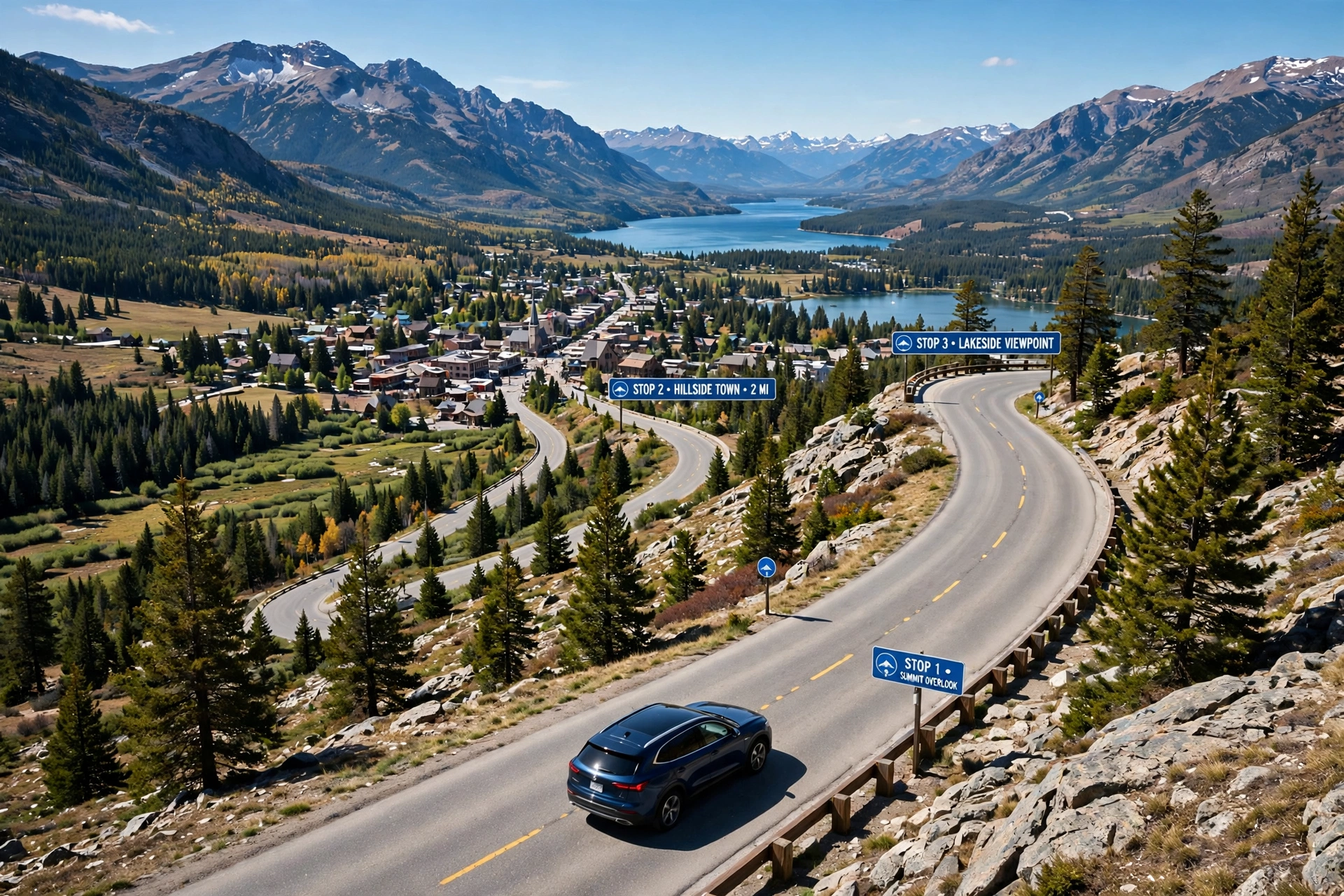
Before you plot anything, choose the two or three places that matter most to you. These are your anchor stops: the reason for the trip. Everything else should fit around them, not compete with them. If a town, viewpoint, or attraction does not excite you once you read what is actually there, cut it now. A shorter list of stops you genuinely enjoy beats a long list you rush through.
Write down your fixed points next: your start point, your end point, your total number of days, and any date you cannot move, such as a booked hotel or an event. These constraints shape the route more than any wish list.
Choose a Route Shape That Fits Your Trip
Most multi-stop road trips fall into one of three shapes. A one-way route works when you can fly home or drop the car at a different location, and it avoids backtracking. A loop brings you home by a different road, so you see new places on the way back instead of repeating the outward journey. A hub-and-spoke trip keeps one base for several nights and uses day trips for nearby stops, which suits travellers who prefer unpacking once.
Pick the shape before you pick the stops, and check practical details such as one-way car return surcharges early, while you can still change it.
Sequence Your Stops in a Logical Order
Order matters more than distance alone. Group stops that sit in the same area and visit them together, rather than zigzagging between regions. Put the stop that needs a morning visit — a market, a viewpoint at sunrise, or a place with limited opening hours — early in that day, and save flexible stops, such as a beach walk or a scenic drive, for the afternoon.
Work out the driving time between each pair of stops, then add time for fuel, food, and parking: a leg a mapping app calls two hours can easily become three once you stop.
Set a Realistic Daily Driving Limit
As a planning guide, keep most driving days to a length you can enjoy rather than endure. For many travellers that means a few hours behind the wheel with breaks, not a full day of motorway driving. One long driving day can work if the next day is deliberately light, but two or three in a row will wear out the driver and leave passengers with little energy for the places you came to see.
Plan a proper break every couple of hours, even on short legs. If you are sharing the driving, agree the changeover points before you set off so nobody has to negotiate them while tired.
Give Each Stop Enough Time — and Some Buffer
For every stop, decide what you actually want to do there and how long that takes. A viewpoint may need thirty minutes; a historic town may deserve half a day. Be honest about this step, because underestimating stop times is the most common reason itineraries fall apart. When you add up driving plus stop time, the day should still end before dark with time to spare.
Then add buffer time you do not assign to anything. Roadworks, a closed attraction, bad weather, or a place you love more than expected will use it. If the buffer goes unused, you gain a relaxed evening. If you skip the buffer, every small delay pushes into the next stop, and the whole day starts to feel rushed.
Book the Stops That Need Booking
Not every stop needs a reservation, but some do, and those should be booked first. Accommodation in small towns, popular attractions with timed entry, and any tour with limited places can sell out or close on certain days. Check opening days and hours for each anchor stop before you finalise the order of your days — a stop planned for a Monday is no use if it is closed on Mondays.
For the rest, keep some flexibility, so you can follow a local recommendation or linger somewhere you enjoy.
Build in a Backup Plan for Disrupted Legs
Even a well-planned route can be disrupted by a road closure or a vehicle problem. Decide in advance which stop you would drop first and where you could stay an extra night, so a disruption does not turn into a scramble.
The same thinking applies when part of a journey involves a flight, whether at the start or the end of your trip. Knowing what to do if your flight is cancelled at the airport helps you protect the rest of your itinerary instead of losing a whole day to confusion at the terminal.
Check the Car, the Fuel, and the Practical Details
A multi-stop itinerary only works if the car does. Before departure, check tyres, oil, coolant, lights, and brakes, and confirm that your spare tyre or repair kit, jack, and warning equipment are in the car. Carry water, a phone charger, and a basic first-aid kit, and keep important documents where the driver can reach them without unpacking the boot.
Plan fuel stops for remote stretches, download offline maps for areas with patchy signal, and note toll roads, parking rules, and any permits your route requires.
A Simple Three-Day Example to Copy
Here is how the method looks in practice, using stop types rather than specific towns so you can adapt it to your own route. Day one: drive to your first anchor stop, visit it in the afternoon, and stay nearby. Day two: a short morning drive to a second stop in the same area, a relaxed lunch, then an afternoon scenic leg to your overnight town. Day three: one final stop on the way home, with a buffer hour built in before you need to be back.
Common Mistakes That Ruin Multi-Stop Itineraries
- Adding a stop just because it is on the way, even though nobody in the car is interested in it.
- Trusting mapping-app times without adding fuel, food, and parking time.
- Planning a different hotel every night on a trip where a single base would be calmer.
- Leaving no buffer, so one delay cascades through every later stop.
- Booking everything in advance and leaving no room for a place you discover on the road.
FAQ:
How many stops should a road trip have? As many as you can visit without rushing. For most travellers, one or two main stops per day, plus short breaks, works better than three or four major stops in a single day.
Should I plan every hour of a road trip? No. Plan the anchors, the driving legs, and the bookings that matter, then leave the smaller hours flexible. A rigid hour-by-hour plan rarely survives contact with the road.
What if I run out of time during the trip? Drop the lowest-priority stop first, not the anchor you planned the trip around. Tell the rest of the group early, rebook the night if you need to, and protect the next day’s anchor stop.
Final Thoughts
A road trip itinerary with multiple stops works when the route serves the trip, not the other way round. Choose a few anchors you truly care about, order them sensibly, keep driving days humane, and leave buffer time for the discoveries that make the journey yours. Plan that way, and you will arrive at each stop with time and energy to enjoy it — which is, after all, the whole point of going.