


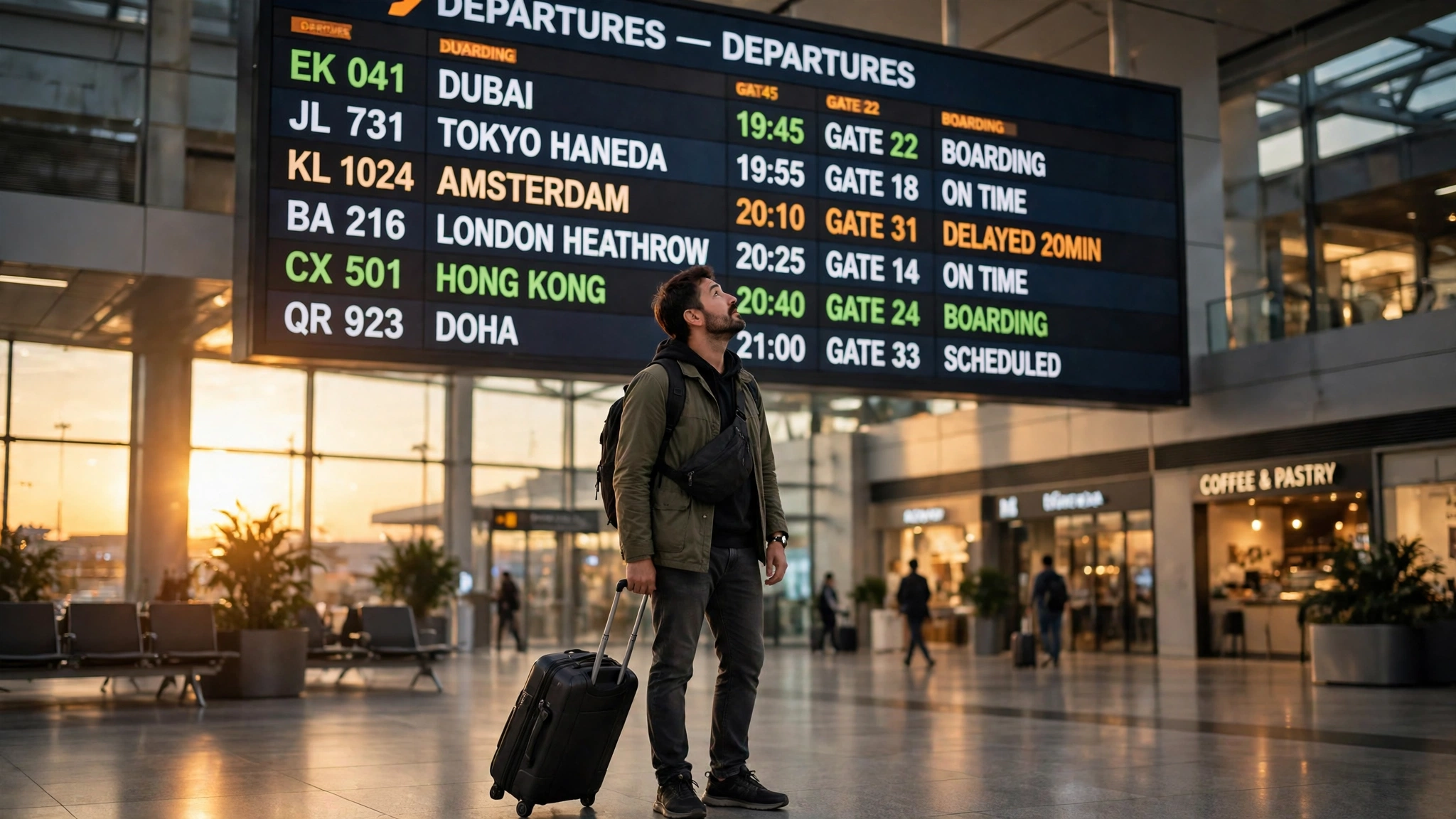
You are standing at the gate, bag in hand, when the board flips to the one word no traveler wants to see: cancelled. Your plans unravel in a single moment — the hotel check-in, the meeting, the person waiting to pick you up. It is frustrating, and it is disorienting, but it is also fixable. What you do in the next thirty minutes matters more than anything else, and this guide walks you through those minutes, step by step, so you can get moving again instead of standing in a queue wondering what to do.
First, Do These Three Things Immediately
Start with confirmation, not panic. Check your airline’s app and your email for the official cancellation notice — the board alone can lag behind, and you want the airline’s own message, which usually includes your rebooking options. Next, screenshot everything: the cancellation notice, your original booking, and any new itinerary the airline offers. Those screenshots become your evidence later if you claim a refund or compensation. Finally, do not leave the airport just yet. Leaving before you have a rebooking or a refund sorted can make both harder to arrange, and the airline’s help desk can only help you while you are there.
While you are doing this, stay near a charging point and keep your phone charged. You will be using the app, possibly calling the airline, and checking alternative flights — a dead phone turns a solvable problem into a much bigger one.
Rebook as Fast as You Can
Speed is everything here, because every other cancelled passenger is trying to get on the same few remaining seats. Work three channels at once: accept or choose a rebooking in the airline’s app, call the airline’s customer service line, and, if the queue at the desk is short, join it too. Whichever channel reaches a human or a confirmed seat first wins — you can abandon the other two.
Be flexible about how you get there. A flight to a nearby airport, a different routing with one connection instead of a direct flight, or a departure the next morning may all get you to your destination sooner than waiting for the same route to reopen. Ask the agent directly whether they can book you on a partner airline — many airlines can, but they will not always offer it unless you ask. If you booked through a travel agent or a booking site rather than directly with the airline, contact them as well, since they may hold the booking and need to make the change.
Before you accept a new flight, check that it actually works: the arrival time, the connection gap (avoid anything under an hour on a rebooking), and whether your checked bag will follow you. A rebooking that strands you at a connection airport overnight is not always better than a later direct flight.
Refund or Rebooking: Know Your Options
You generally have a choice, and it is worth understanding it before you tap “accept” on the first offer. If the airline cancels your flight, you can usually either take the rebooking they offer or decline it and ask for a refund of the unused part of your ticket. Think about which one your trip actually needs: if you still need to travel, rebooking is usually the right call; if the trip no longer makes sense, a refund is better than a voucher you may never use.
Your rights depend on where you are flying. In the United States, Department of Transportation rules require airlines to refund you for a cancelled flight if you decline the alternative they offer, even on a non-refundable ticket, and that refund is meant to arrive within seven business days for a credit card purchase. On flights departing the European Union, or arriving there on an EU airline, Regulation (EC) No 261/2004 goes further: on top of a refund or rebooking, you may be owed fixed compensation — between €250 and €600 depending on flight distance — when the airline caused the cancellation at short notice. Extraordinary causes such as severe weather usually remove the compensation, but not the refund or rebooking. Rules vary by country and route, so treat these as a starting point and check the rule that covers your specific flight before you claim.
One warning: do not accept a voucher in a hurry if what you really want is a refund. Airlines often offer vouchers first, and accepting one can close off your refund option. If you are offered a voucher, ask explicitly whether you can have a refund instead, and get the answer in writing.
If You Are Stuck Overnight
An overnight delay is where a cancellation goes from annoying to genuinely uncomfortable, so sort shelter early. Ask the airline whether it will provide a hotel and transport — on many routes, especially in Europe, it must when the wait runs overnight, and some airlines commit to it for cancellations within their control. If the airline will not provide one, ask for a written statement of why, keep it, and book something reasonable yourself near the airport; you may be able to claim the cost back later.
Sort your bags before you leave the terminal. If your checked luggage was already loaded, ask where it will be held and how to retrieve it; if it never left, confirm it is tagged for your new flight. Pack a small overnight kit in your carry-on if you can — toothbrush, phone charger, a change of clothes — because retrieving a checked bag at midnight in a strange airport is rarely quick. And if your rebooked flight lands you a day late with your body clock completely scrambled, these tips on how to avoid jet lag on long-haul flights can help you recover faster once you finally arrive.
Protect the Rest of Your Trip
A cancelled flight rarely cancels only itself. Call or message your hotel as soon as you know your new arrival time — many hotels will hold a late check-in or shift your booking by a day if you tell them early, but a no-show can cost you the first night. Do the same for car rentals, tours, and anyone meeting you at the other end. If you have travel insurance, call the insurer’s helpline now, not when you get home: many policies cover extra meals, hotels, and missed connections, but only if you follow their process and keep receipts.
Keep every receipt from this point on — meals, transport, a hotel, even bottled water. Photograph them as you go so nothing is lost. If you end up claiming costs from the airline or your insurer, receipts and timestamps are what turn a complaint into a payment.
Keep Records and Claim Later
Once you are rebooked or refunded, the work is not quite over. Write down what happened while it is fresh: the flight number, the time you were told, the reason the airline gave, and the names of any staff who helped you. Save the screenshots and receipts in one folder. Then, if you believe you are owed compensation or expenses, submit the claim to the airline in writing — through its official claims form or by email — and keep a copy. Airlines can take weeks to respond, and if yours stalls, the aviation regulator in the country you departed from is the next step. Set a reminder to follow up after two weeks; claims that sit quietly tend to stay sitting.
Frequently Asked Questions
Should I book a new flight myself instead of waiting for the airline?
Usually not, unless the airline cannot offer you anything usable and you need to travel urgently. Booking yourself can complicate a refund, because the airline may argue you chose not to take its alternative. If you do book yourself, keep proof that the airline’s options were unsuitable, and claim the cost back afterwards.
What if my cancellation means I miss a connecting flight?
If both flights were on one booking, the airline is responsible for getting you to your final destination — tell them about the connection immediately so the rebooking covers the whole journey, not just the first leg. If you booked separate tickets, the second airline owes you nothing, which is why separate-ticket connections are risky; your travel insurance may help in that case.
Does travel insurance cover a cancelled flight?
It can cover the knock-on costs — a missed hotel night, extra meals, or a new flight — but policies differ widely, and some exclude airline-caused cancellations that the airline itself must cover. Read your policy’s travel-disruption section and call the insurer before spending large amounts.
Final Thoughts
A cancelled flight feels like your trip has ended before it began, but in most cases it is only a detour. Confirm the cancellation, rebook through every channel you have, understand whether a refund or a rebooking serves you better, and keep every receipt and screenshot along the way. Act fast, stay polite but firm with the airline, and protect the rest of your plans before the day slips away. You will still get there — just on a different schedule than the one you packed for.