


You step off the plane after a twelve-hour flight, blinking in bright daylight while your body insists it is the middle of the night. Your first day in a new city slips away in a fog of yawning, heavy eyelids, and a 3 a.m. wake-up you did not plan. Jet lag can do that — but it does not have to ruin your trip. With a little planning before you fly and a few deliberate choices during and after the flight, you can land feeling far more human.
What Jet Lag Actually Is
Jet lag happens when you cross several time zones faster than your body clock can adjust. Your internal clock still runs on home time, so you feel sleepy when the new city is wide awake and wide awake when everyone else is asleep. It is not just tiredness from a long flight — although a cramped, sleepless flight certainly makes it worse. The more time zones you cross, the stronger the effect tends to be, and many travelers find eastward travel (where you lose hours) harder than westward travel (where you gain them). The good news is that your body does adjust; the strategies below simply help it adjust faster.
Before You Fly: Shift Your Sleep Gradually
The single most effective thing you can do starts days before departure. For two or three nights before your flight, move your bedtime and wake-up time by 30 to 60 minutes toward your destination’s time zone. Flying east? Go to bed earlier. Flying west? Stay up a little later. This small shift means your body has less catching up to do when you land.
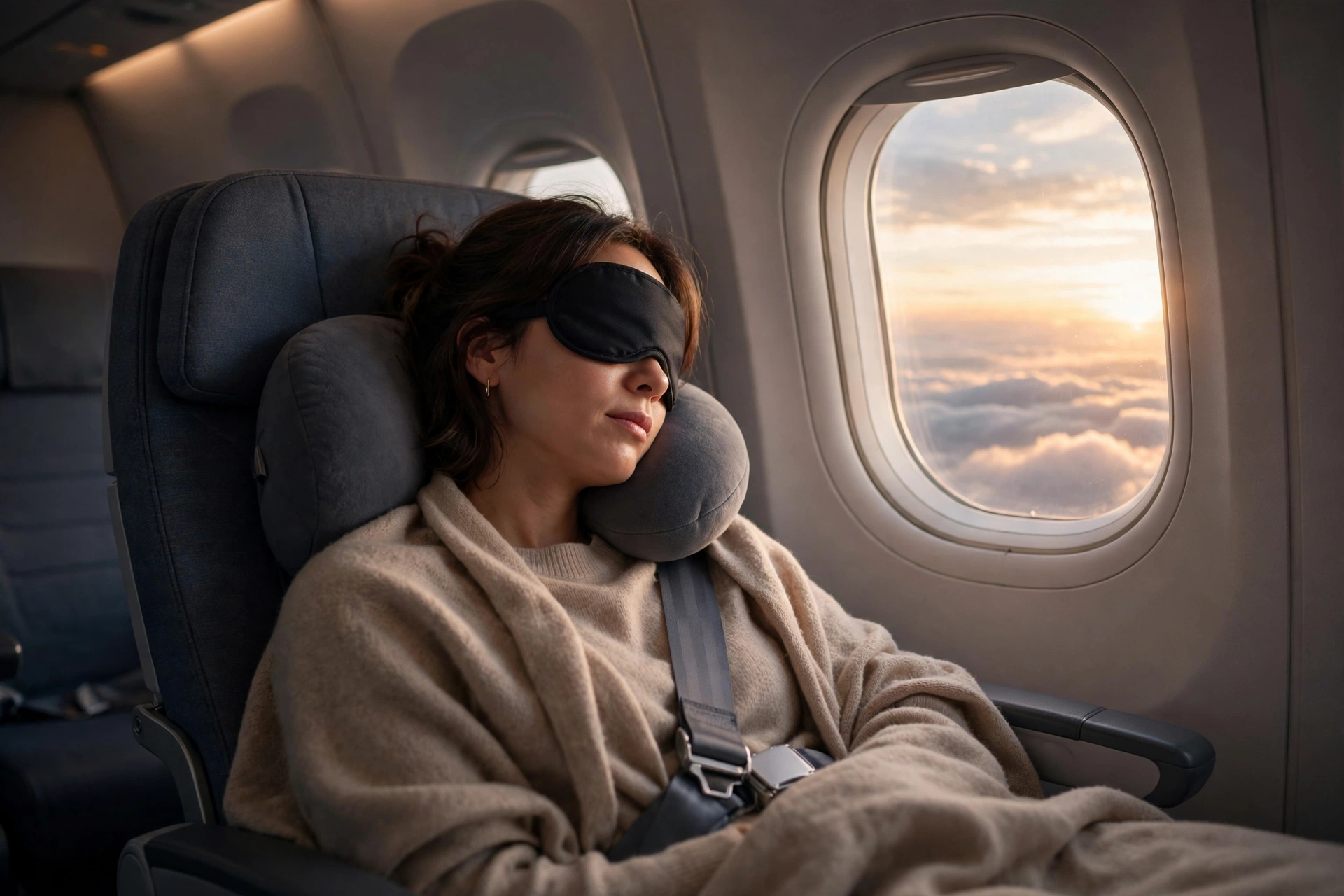
Also plan your packing with sleep in mind. A comfortable eye mask, earplugs or noise-cancelling headphones, and a neck pillow you actually like can make the difference between dozing for hours and staring at the seatback screen all night. Packing travel-size essentials for your carry-on keeps your sleep kit and toiletries easy to reach without digging through your main bag mid-flight.
Choose Your Flight and Seat Wisely
When you have a choice, pick a flight that arrives in the late afternoon or early evening at your destination. That way you only need to stay awake a few hours before a normal local bedtime, instead of fighting sleep all day. A window seat helps too: you can lean against the wall, control the shade, and avoid being woken every time your neighbour gets up. If you know you sleep poorly on planes, it is worth paying a little extra for a seat with more legroom rather than spending your first two days recovering.
On the Plane: Sleep, Light, and Water
As soon as you board, set your watch and phone to your destination’s time and start living by it. If it is nighttime at your destination, try to sleep — even if you do not feel tired yet. If it is daytime there, stay awake, read, watch a film, and resist the nap.
Light is your body clock’s strongest signal. Keep your window shade open when it is daytime at your destination and closed when it is night there. Sunglasses on a bright morning arrival can help if you need to delay your body’s sense of morning until a more useful hour.
Drink water steadily through the flight. Cabin air is dry, and dehydration makes fatigue and headaches worse. Keep a bottle at your seat and refill it when the crew comes round. Eat light meals rather than one heavy one, and go easy on alcohol — it may help you doze off, but the sleep it gives is shallow, and you will usually wake up feeling worse.
What About Caffeine?
Caffeine can be a useful tool if you use it strategically: a coffee in the morning at your destination can help you stay alert until bedtime. But caffeine late in the day will push your bedtime later and make the next night harder. As a rule, treat it like a morning aid, not an all-day crutch, and skip it in the hours before you plan to sleep.
When You Land: Get on Local Time Immediately
Resist the temptation to nap the moment you reach your hotel. Get outside into natural daylight, take a walk, eat your meals at local times, and stay active until a reasonable local bedtime. Sunlight, food, and activity all tell your body clock that this is the new normal. If you absolutely must nap, keep it short — 20 to 30 minutes — and set an alarm. A three-hour afternoon nap feels wonderful in the moment and usually costs you the whole night.
The First 48 Hours: A Simple Recovery Plan
Day one is about staying on local time, even if you feel groggy. Eat breakfast at a normal hour, spend time outdoors, and avoid heavy planning for the morning — schedule lighter sightseeing first. By day two, most people feel noticeably better, especially if they slept well on the first night. Keep the same routine: daylight in the morning, activity during the day, and a regular bedtime. If you are still waking very early, do not lie in bed frustrated; get up, have a quiet morning, and try again the next night. Consistency beats any single trick.
What About Melatonin and Sleep Aids?
You will hear a lot about melatonin and other sleep aids for jet lag. Some travelers find a small dose at local bedtime helps them fall asleep for the first night or two. But sleep aids affect everyone differently, and they are not suitable for every traveler — especially if you take other medication, are pregnant, or have a medical condition. This article is general information, not medical advice: if you are considering a sleep aid, check with your doctor or pharmacist first, and never try a new one for the first time on the night before an important meeting or a long drive.
Common Mistakes That Make Jet Lag Worse
- Staying on home time “just for a short trip” — even a three-day trip goes better if you switch to local time on arrival.
- Sleeping through the whole flight when it is daytime at your destination, then arriving exhausted and unable to sleep that night.
- Drinking heavily on the plane to fall asleep, then waking dehydrated and groggy.
- Napping for hours on arrival and then lying awake all night, which resets nothing.
- Skipping meals or eating at odd hours, which confuses your body clock further.
Frequently Asked Questions
How long does jet lag last?
For most people, it eases noticeably within a day or two and fades over a few days. Crossing more time zones, and flying east, usually means a longer adjustment. If grogginess lasts well beyond a week, or you have other symptoms, it is worth speaking to a healthcare professional.
Is it better to sleep on the plane or stay awake?
It depends on the time at your destination. Sleep when it is night there; stay awake when it is day there. Matching the plane to your destination’s clock is the whole strategy in one sentence.
Do stopovers help with jet lag?
A stopover can help if it lets you sleep properly in a real bed and break a very long journey into two manageable flights. But a short, stressful connection with a rushed change of planes usually adds exhaustion without any benefit to your body clock.
Final Thoughts
You cannot completely outsmart time zones, but you do not have to surrender your first days to them either. Shift your sleep a little before you go, use light and mealtimes to set your new clock, sleep strategically on the plane, and stay on local time from the moment you land. Do those four things and your trip starts when you arrive — not two days later.