


You check in after a long day of travelling, drop your bag on the bed, and look forward to a proper night’s sleep. Then the lift dings outside your door every few minutes, the corridor hums with voices, and a delivery truck reverses below your window at dawn. If you are a light sleeper, a noisy hotel room is not a small annoyance — it can ruin the next day of your trip.
A quiet room is rarely luck. It is mostly a booking decision, made before you arrive, plus a few checks at check-in. This guide covers which rooms to ask for, what to look for in reviews, and what to pack.
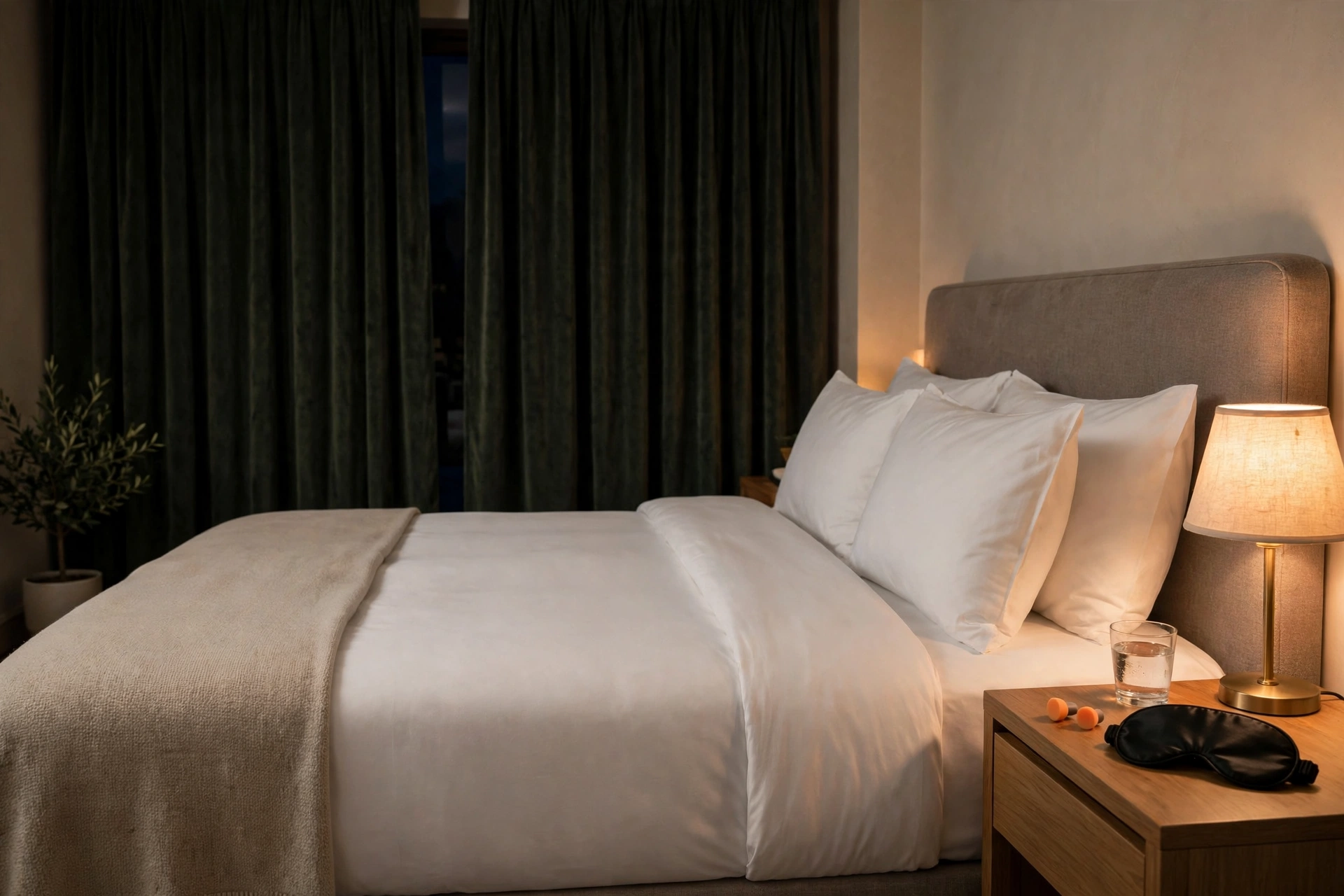
First, Know Where Hotel Noise Actually Comes From
Hotel noise usually comes from three directions. Corridor noise — lifts, ice machines, housekeeping trolleys, and passing guests — is the most common complaint. Outside noise — traffic, bars, or construction — is harder to block once you are in the room. And noise from inside the building — plumbing, air conditioning, or footsteps from above — is hardest to predict, because it rarely shows up in photos.
So “quiet hotel” is not a single feature to search for. You are trying to reduce all three sources at once: away from the lift, away from the street, and away from busy machinery. No room is silent, but the right room can be noticeably calmer.
Before You Book: Read Reviews for Noise, Not for Luxury
Most reviews talk about breakfast and decor. For a light sleeper, the useful ones mention sleep. Search reviews for “noise”, “loud”, “thin walls”, “traffic”, and “sleep”. One complaint may be bad luck, but if several recent guests mention the same problem — road noise on one side, or a bar downstairs — take it seriously.
Check when the review was written, too. A renovated hotel may have better windows than an old complaint suggests, and a quiet street can grow noisy if a new bar opens nearby. Recent reviews tell you more than a five-year-old rating.
Also look at the hotel’s location on a map, not just its photos. A hotel on a main road, above a restaurant, or next to a nightlife strip will be louder than one set back from the street. A courtyard-facing room in a busy area can even be quieter than a street-facing room in a “quiet” hotel.
Ask for the Quietest Room, in Specific Words
Most booking sites have a “special requests” box, and most guests waste it on a vague “quiet room please”. Staff assign rooms from a plan, so specific requests are far easier to fulfil. Try this:
“I am a light sleeper. Please could I have a room away from the lift and ice machine, not facing the main road, on an upper floor if possible? Thank you.”
That note covers the three biggest noise sources at once. If you book directly, by phone or email, ask one more question: “Which side of the building is quietest at night?” Night staff usually know, and a direct booking also makes it easier to change rooms later.
A few choices tend to help, though none is a guarantee. Upper floors sit further from street and lobby noise, but can be closer to rooftop machinery, so ask rather than assume. End-of-corridor rooms see less foot traffic than rooms beside the lift. Corner rooms have fewer shared walls on one side, but windows on two sides, so a corner room facing a busy street is not automatically quiet. Where you have a choice, pick windows facing away from the road.
At Check-In: Take Two Minutes to Listen
When you reach your room, do not unpack straight away. Stand quietly for a minute with the door closed and listen: can you hear the lift, the corridor, or traffic? Run the tap and flush once — loud plumbing now usually means loud plumbing at 3 a.m. too. Switch the air conditioning on and off, and notice whether it rattles or clicks as it starts.
If something is clearly wrong — a room beside the lift, a window that will not close, or constant noise from next door — ask politely to move before you settle in. It is far easier for the front desk to change your room at check-in than at midnight. Try: “I am a very light sleeper, and this room is quite close to the lift — is there a quieter room available?” If the hotel is full, ask for a room on the other side of the corridor, or a note for housekeeping to avoid early-morning work near your door.
Pack a Light-Sleeper Kit (It Weighs Almost Nothing)
Even the best-chosen room can have one noisy night, so pack a small kit every time:
- Earplugs you have tested at home. Foam plugs suit many people; silicone or wax plugs mould to the ear and can feel better for side sleepers. Try them for a few nights before your trip, not first in a strange bed.
- A white noise app or small speaker. Steady sound — rain, a fan, or plain white noise — masks sudden sounds like doors closing. Download it before you travel, so you are not relying on hotel Wi-Fi.
- A comfortable sleep mask. Light and noise often arrive together in rooms with thin curtains. A mask that does not press on your eyes helps you fall back asleep faster after a disturbance.
- A rolled towel for the door gap. A gap under the door lets in corridor sound and light. A towel rolled along the bottom is a simple, free fix.
Keep the kit in your hand luggage, not in checked baggage — you want it on the first night, not after your suitcase arrives.
When Noise Wakes You in the Night
If noise wakes you, try the simple steps first: earplugs in, white noise on, and ten minutes to settle again. Many hotel sounds — a group returning late, a trolley passing — fade on their own.
If the noise is continuous, such as a party next door or a faulty machine, call the front desk rather than knocking on a neighbour’s door. Describe what you can hear and that it is keeping you awake. Hotels deal with this every night, and a call creates a record. If it cannot be fixed that night, ask in the morning about moving rooms for the rest of your stay.
On trips across time zones, a quiet room matters even more, because your body is already trying to sleep at the wrong hours. For tips on adjusting your sleep schedule, see this guide on how to avoid jet lag on long haul flights.
FAQ: Quiet Hotel Rooms for Light Sleepers
Are top-floor rooms always quieter? Often, but not always. Top floors avoid footsteps from above, but can sit below rooftop air-conditioning units. Ask about the top floor, and also which side of the building is quietest.
Do earplugs block all hotel noise? No — they reduce sound, they do not remove it. They work best on steady background noise and muffled voices. With white noise and a room away from the lift, they usually make the difference between waking at every sound and sleeping through most of the night.
Can a hotel guarantee a quiet room? Most hotels can guarantee a room type, not a specific room. That is why a specific written request, made at booking and repeated at check-in, matters more than a general note. If quiet sleep is essential, book directly and confirm your request before you arrive.
Is it worth paying more for a quieter hotel? For one night before an early start, a well-reviewed hotel on a side street can be worth it. For a longer stay, careful room choice and a sleep kit often matter more than the hotel’s star rating.
Final Thoughts
Finding a quiet hotel room as a light sleeper comes down to three habits: check recent reviews for noise, ask for a specific kind of room instead of just a “quiet” one, and listen for two minutes at check-in before you unpack. Add a small sleep kit — earplugs you trust, white noise, and a sleep mask — and most hotel nights become far easier.
You cannot control every hotel sound, but you can stack the odds in your favour before you turn the key.