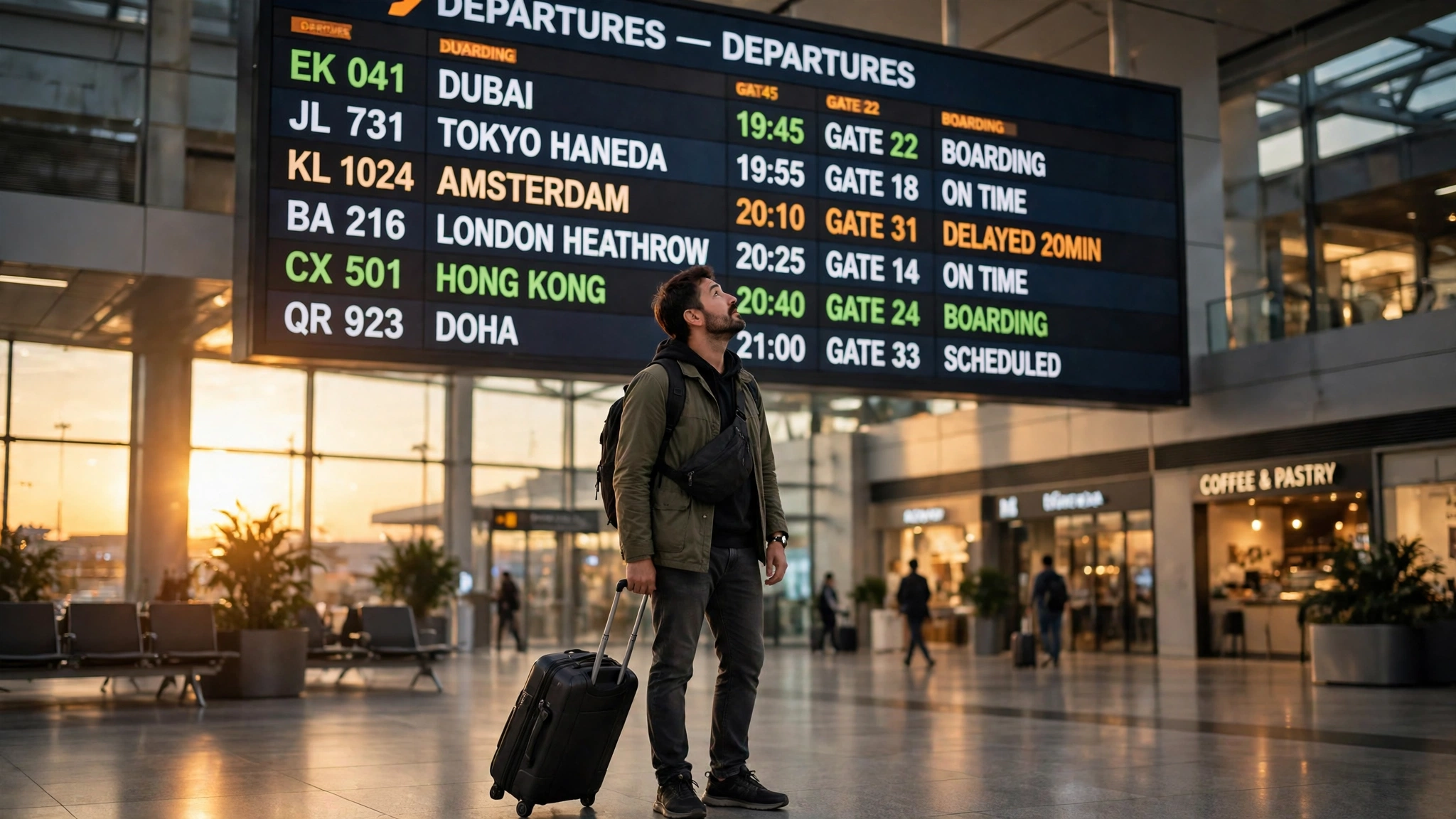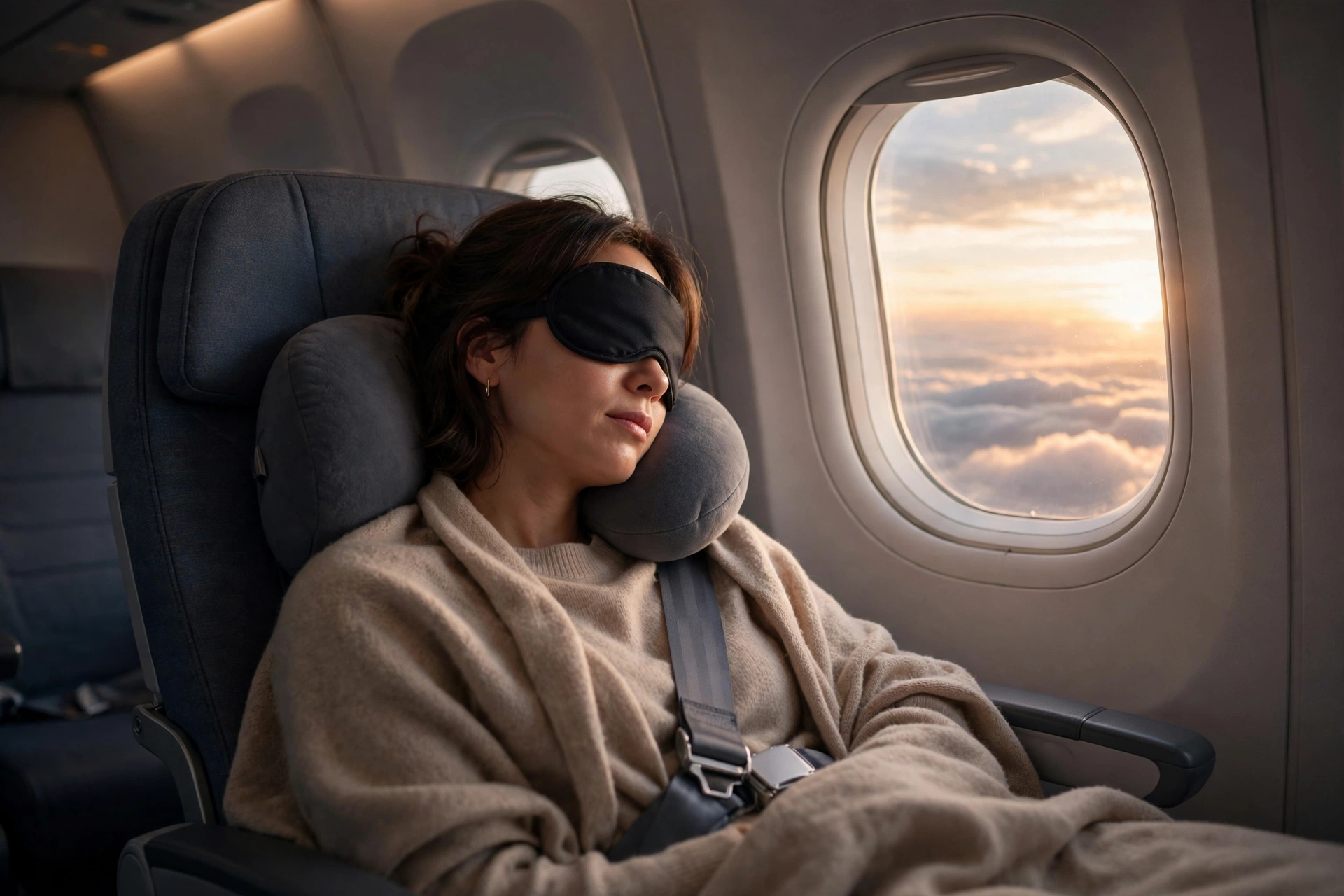


You are buckled into your seat, the plane is still at the gate, and your child is already asking when you will land. A long flight with kids can feel like a test of endurance, but it does not have to be. With a little planning, the right mix of activities, and realistic expectations, you can turn those hours in the air into a calm, even enjoyable, part of the trip.
This guide covers what to pack, how to pace screen time, which screen-free ideas actually work in a cramped seat, and how to handle the moments when patience runs thin.
Start With a Plan, Not a Bag of Random Toys
The biggest mistake is tossing a pile of toys into a bag the night before and hoping for the best — children get bored faster when everything is available at once. Instead, plan the flight in blocks of about 45 to 60 minutes, with one activity per block. A six-hour flight becomes six manageable chapters rather than one endless stretch.
Before you fly, talk to your child about the journey: show them the route on a map, explain takeoff and landing, and let them help choose a few activities. A child who helped pick the entertainment is far more likely to use it.
Keep a small bag under the seat in front of you, not in the overhead bin — you will need it constantly.
Pack an Entertainment Kit by Age
What works for a three-year-old will bore a ten-year-old, so tailor the kit to your child’s age.
For toddlers (ages 2–4): sticker books, a small set of figurines, a busy board, and a couple of favourite snacks. Avoid anything with small pieces that can roll under seats, and skip anything noisy — your fellow passengers will thank you. A new toy wrapped in paper buys extra minutes — unwrapping is half the fun.
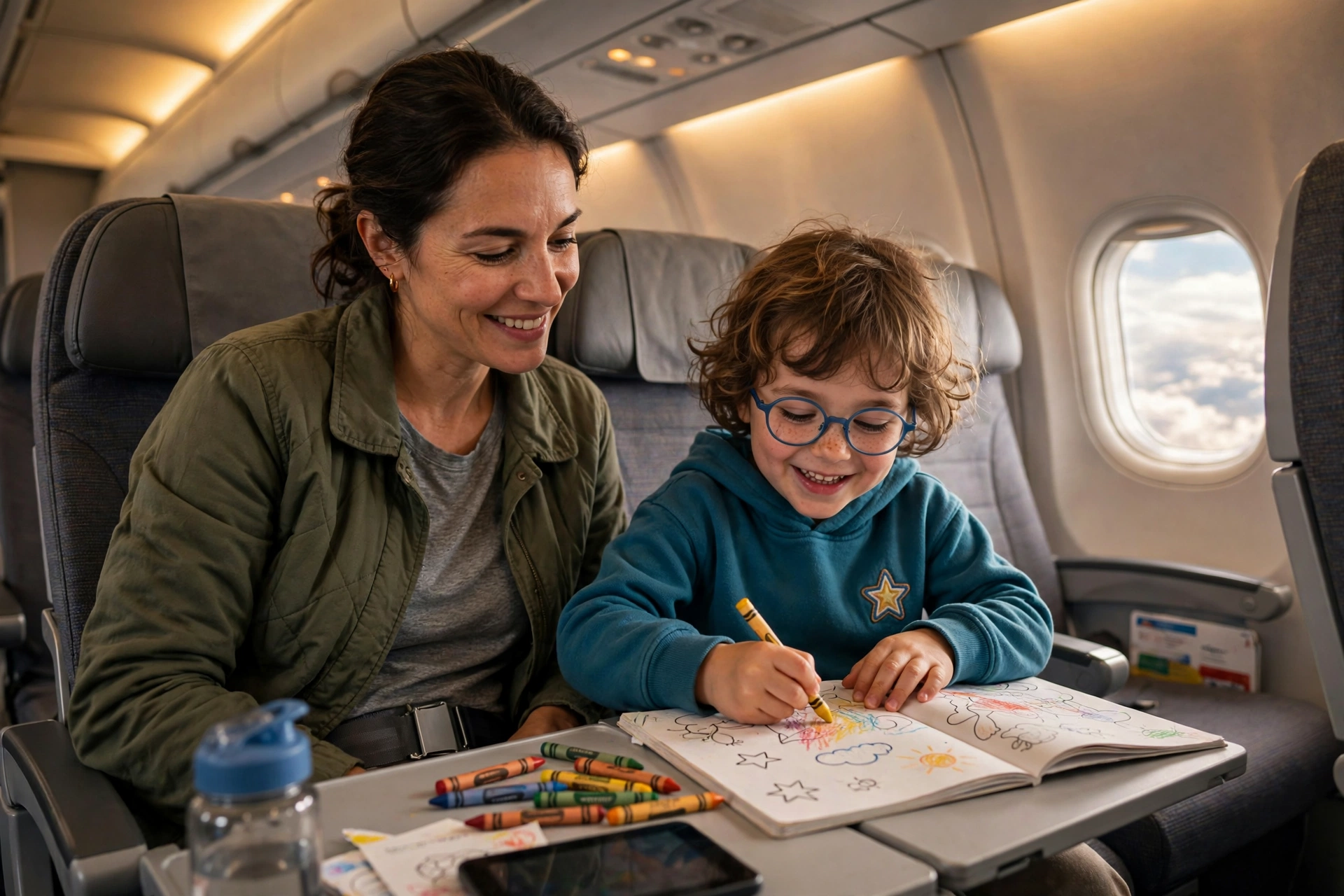
For young children (ages 5–8): colouring books and crayons, activity books with mazes and puzzles, magnetic board games, and a tablet loaded with a few chosen apps and shows. A small notebook and pencils also work well for drawing games like tic-tac-toe or hangman.
For older children (ages 9–12): books, a journal, card games, a handheld console or tablet, and headphones they chose themselves. Give them a bit of independence: let them manage their own entertainment bag. Responsibility itself can be engaging at this age.
For teenagers: music, podcasts, downloaded films, e-books, and a phone charger. Teens mostly want their devices and some peace — on a long flight, that is fine.
Use Screen Time Wisely, Without the Guilt
Screens are the easiest entertainment on a plane, and there is no reason to feel guilty about using them. The trick is pacing: if you hand over the tablet in the first hour, you will have nothing left for hour five. Save the most exciting new show or game for the middle of the flight, when boredom peaks.
Download everything before you leave home. In-flight Wi-Fi is often slow, expensive, or unavailable, and streaming rarely works reliably at altitude. Load a mix of shows, films, and games, and bring child-sized headphones — adult headphones slip off small heads, and earbuds are uncomfortable for long stretches.
Set a simple rhythm: screen time, then a non-screen activity, then a snack, then screens again. Children accept limits more easily when they know another fun thing is coming next.
Screen-Free Ideas That Actually Work at 35,000 Feet
Not every activity needs a battery — some of the best in-flight entertainment is gloriously low-tech:
- Drawing challenges: take turns drawing an animal, a house, or a silly monster, then compare results. Timed rounds add excitement.
- Storytelling games: start a story with one sentence and take turns adding the next. The sillier it gets, the longer it lasts.
- Window-seat science: if you have a window seat, watch the clouds, spot rivers and cities below, and guess what you are flying over.
- Card games: a small pack of cards covers dozens of games, from Go Fish to Uno, and takes up almost no space.
- Journaling: give older kids a travel journal to record the trip. Drawing the plane, writing about the destination, and collecting boarding passes turns the journey into a keepsake.
Rotate activities before boredom sets in, not after — a fresh activity offered early feels like a treat, not a bribe.
Snack Your Way Through the Boring Stretches
Snacks are entertainment, not just food. Pack a variety of small, non-messy options — crackers, cheese cubes, dried fruit, granola bars, and fruit pouches for younger children. Avoid anything sticky, crumbly, or strongly scented.
Hand snacks out gradually rather than all at once. A snack box with little compartments, opened one section at a time, can stretch a single snack break into twenty minutes of happy occupation. Save one special treat for the final hour, when everyone is tired and restless.
Keep water handy — cabin air is dry, and a thirsty child is a cranky child. Fill a refillable bottle after security instead of waiting for the drinks cart.
Build Rest Into the Flight
Entertainment is only half the plan. Rest is the other half, especially on overnight or very long flights. Bring a small travel pillow, a light blanket, and a favourite soft toy or comfort item. Dress your child in comfortable layers, since cabin temperatures swing between chilly and warm.
Where you can, align sleep with the destination’s time zone. If you are landing in the morning, encourage a nap during the second half of the flight: dim the screen, lower your voice, and settle into a quiet activity like reading. For practical tips on adjusting sleep around travel, see this guide on how to avoid jet lag on long haul flights — many of the same timing tricks help children settle, too.
Do not expect a child to sleep on command — a calm, quiet activity is a fine substitute. The goal is a rested-enough child, not a perfect nap.
Handle the Hard Moments Calmly
Even the best plan hits turbulence — sometimes literally. Ear pressure during takeoff and landing bothers many children. For babies, feeding or a pacifier helps; older children can chew gum, sip water, or yawn on purpose. Explain what is happening so it feels less scary.
If a tantrum arrives, stay calm and low-key. Take a short walk down the aisle together if the seat-belt sign allows it. Movement resets a child’s mood remarkably well. Ignore the imagined judgement of other passengers — most have been there themselves.
For delays and long waits at the gate, keep one surprise activity in reserve — something your child has not seen yet. Guard it until you truly need it.
FAQ: Keeping Kids Entertained on a Long Flight
How much screen time is okay on a long flight? There is no strict rule — a travel day is not a normal day. Aim for a balance of screens, activities, snacks, and rest, but do not stress about the exact split. A happy, occupied child matters more than a perfect ratio.
What should I pack for a baby on a long flight? Bottles or feeding supplies, nappies and wipes for the whole flight plus spares, a change of clothes for both baby and you, a comfort item, and a few quiet toys. Pack for delays, not just the scheduled flight time.
Are activity kits worth buying? Ready-made busy bags can save preparation time, but check what is inside first. The best kits mix several types of play — drawing, stickers, puzzles — rather than one novelty that lasts ten minutes.
How do I keep two children of different ages entertained? Pack separate kits, but include one shared activity, like a card game or a storytelling game, that both can enjoy. Shared play often lasts longer than solo play because the children entertain each other.
Final Thoughts
Keeping kids entertained on a long flight is less about packing the perfect bag and more about pacing the journey: plan in blocks, mix screens with screen-free play, use snacks strategically, and build in rest — and keep one surprise in reserve for the rough patches.
Above all, relax your own standards for the day. A child who watched two films, ate too many crackers, and drew a questionable portrait of the pilot has still had a perfectly good trip.