

Riga is one of Europe’s most rewarding capitals for a short break. The Old Town is a UNESCO World Heritage site, the Art Nouveau district is one of the finest in the world, and the city has a relaxed, walkable scale that lets you see a great deal in two or three days — without the crowds or prices of the bigger European capitals. Here is how to explore it properly.
The Old Town: Riga Cathedral and the House of Blackheads
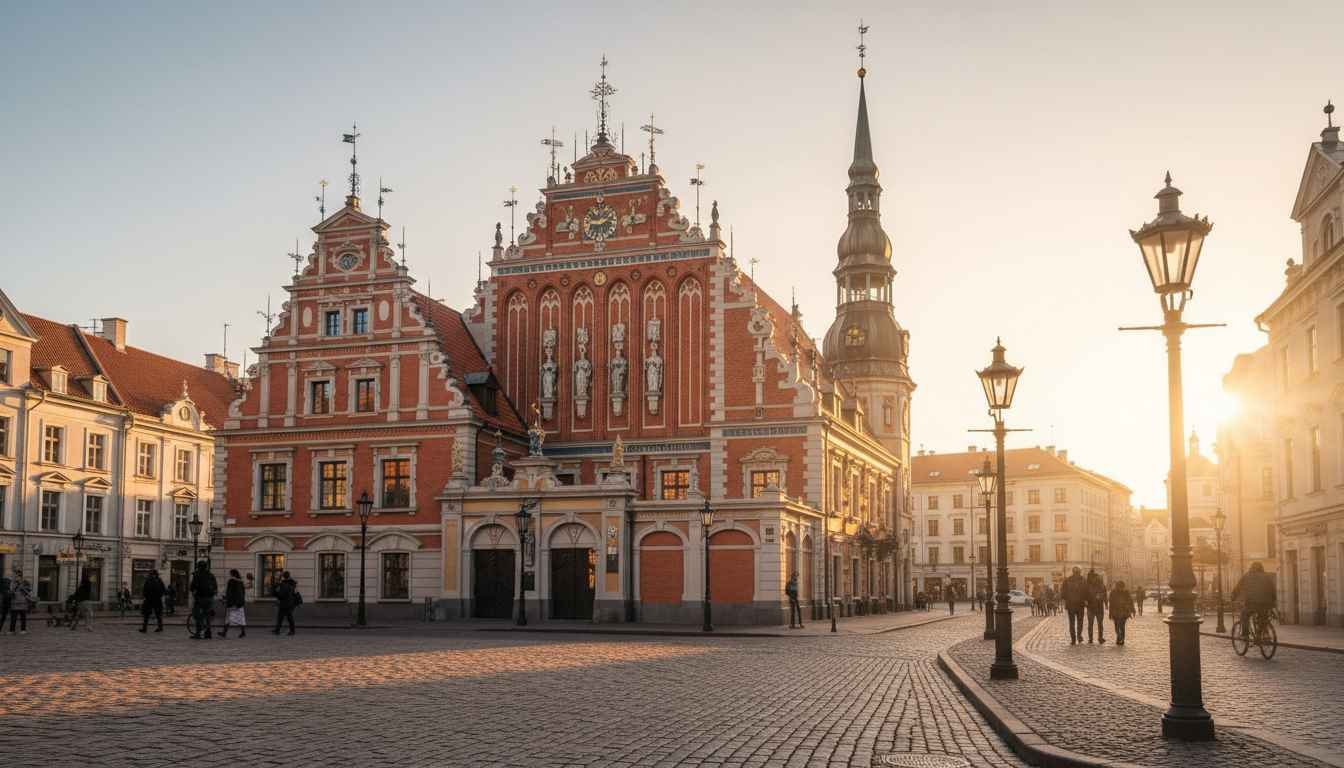
Start in Vecrīga, the Old Town, where the streets are cobbled and most sights sit within a few minutes’ walk of each other. Riga Cathedral, founded in the early 13th century, is the largest church in the Baltic states, and its organ concerts are a highlight if you can time a visit to one. The House of Blackheads, on Town Hall Square, is a beautifully decorated merchant guildhall — the original was destroyed in the Second World War and rebuilt in the 1990s, and its ornate facade is one of the most photographed sights in the city.
Climb the tower of St Peter’s Church for the best view over the Old Town’s rooftops and the Daugava River. The Three Brothers, a row of three medieval houses on Mazā Pils Street, show how the city’s merchants lived centuries ago. Take your time here: the Old Town rewards wandering, and its cafés and small restaurants are at their best away from the main square.
The Art Nouveau District: Alberta Street and Beyond
Riga has one of the largest collections of Art Nouveau architecture anywhere in the world — around a third of the buildings in the city centre were built in the style. Alberta Street is the showpiece: a quiet residential street where almost every facade is decorated with sculpted faces, flowing curves and ornate details. The Riga Art Nouveau Centre, housed in a restored apartment on the same street, lets you step inside a period interior and see how the style looked in daily life.
The district around Elizabetes Street and Strēlnieku Street is worth an hour of slow walking. Look up — the best details are above the ground floor — and notice how the style shifts from the decorative early period to the more restrained national romantic style.
Riga Central Market and the Daugava River
Riga Central Market, just south of the Old Town, is one of the largest markets in Europe, housed in five former Zeppelin hangars. The pavilions are organised by food type — fish, meat, dairy, vegetables — and the stalls outside sell flowers, berries and pickled goods. It is the best place in the city to try Latvian food: rye bread, smoked fish, grey peas and the local speciality, speķa pīrāgi, small bacon-filled pastries.
From the market, walk along the Daugava riverfront for views back across the Old Town, or take a short boat trip in summer. On the far bank, the National Library of Latvia, a striking modern building, has a viewing platform and exhibitions that are worth a visit.
Parks, Museums and a Beach Day Trip
Mežaparks, on the shores of Lake Ķīšezers, is Riga’s great green escape — a forested park with walking trails, a zoo and an open-air concert stage. The Latvian National Museum of Art, near the park’s edge, holds the country’s best collection of Latvian painting and sculpture, and the building itself, recently restored, is worth seeing.
For a change of pace, take the train to Jūrmala, the beach town about half an hour west of Riga. Its long sandy beach, wooden resort houses and quiet pine forests make an easy half-day trip, and the train runs frequently from Riga Central Station.
Planning Your Trip to Riga
Summer is the best season for long days and outdoor cafés, while December brings one of Europe’s oldest Christmas markets on Dome Square. Spring and autumn are quieter and cheaper, with a good chance of crisp, clear weather. Latvia uses the euro, and English is widely spoken in the city centre. Riga is compact — most of the Old Town and the Art Nouveau district are best explored on foot, with trams for longer hops. If you are planning a wider trip, our guide to the best places in Europe to visit will help you fit Riga into a larger route.
FAQ
What are the main attractions in Riga, Latvia?
The Old Town with Riga Cathedral and the House of Blackheads, the Art Nouveau district on Alberta Street, Riga Central Market, Mežaparks and the Latvian National Museum of Art.
When is the best time to visit Riga, Latvia?
Late spring to early autumn for the best weather and longest days. December is magical for the Christmas market, though days are short and cold.
Is Riga suitable for families?
Yes. The Old Town is flat and walkable, Mežaparks has a zoo and playgrounds, and the beach at Jūrmala is an easy train ride away.
How many days do you need in Riga?
Two full days cover the Old Town, the Art Nouveau district and the market. Add a third day for Mežaparks and a trip to Jūrmala.
Final Thoughts
Riga rewards the traveller who looks up at the facades, lingers in the market halls and gives the city more than a single day. It is a capital with a medieval heart, an Art Nouveau crown and a relaxed modern life of its own — and one of the best-value city breaks in northern Europe. Come for the architecture, stay for the food, and leave with the quiet certainty that you will be back.