

You have a painting project, a pet at home, and a garage full of fumes waiting to happen. A do it yourself paint booth solves the middle problem: it gives you a contained, ventilated space where overspray stays in one place, dust stays out of the wet paint, and the animals and people you share a home with stay clear of the fumes.
A home booth is not a professional spray booth, and it should not pretend to be one. It is a simple, temporary setup — a frame, plastic sheeting, a fan and good light — built for small projects like furniture, crafts, model work and touch-ups. This checklist walks through it step by step, with pet safety built in from the start.
Choose a Pet-Safe Location
Pick a spot that can be closed off: a garage corner, a spare room, a covered balcony. Avoid shared living areas where food bowls, pet beds and curious paws are part of the room. The booth area should be somewhere pets and children cannot wander into unsupervised, and somewhere you can leave the paint to dry undisturbed.
If you only have a small apartment with limited ventilation, a spray booth may not be the right call at all — brush painting outdoors or in a well-ventilated space is the safer option, and large or industrial paint jobs belong in a professional booth.
Build a Light Frame
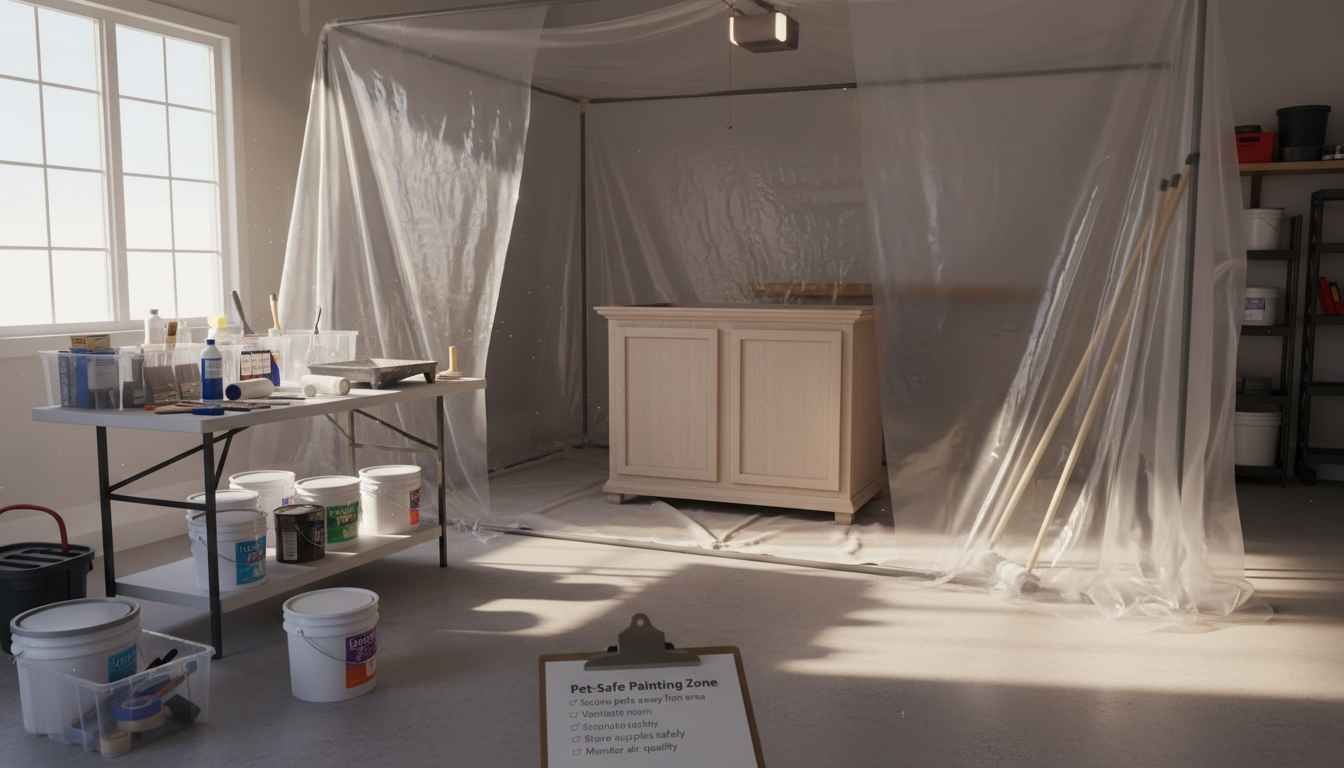
Keep the frame simple and temporary. PVC pipe, lightweight timber or even sturdy cardboard panels are enough for a small booth — think of it as a playpen, not a construction project. Size it to your largest piece with room to move around it, and leave one side open or curtained so you can step in and out easily.
Tape the joints so the frame does not wobble while you work, and weigh down the base if you are using a fan, since the airflow will push against the sheeting.
Seal It with Plastic Sheeting
Clear plastic drop sheets work best: you can see through them, and overspray shows up immediately. Drape the sheeting over the frame, tape the seams tightly, and run a sheet across the floor underneath to catch drips.
Check the seals before you start painting — gaps at the corners are where overspray escapes, and a loose flap near the fan will flap and smear wet paint. Keep pets out of the room entirely while the sheeting is up; a cat or dog pushing through a plastic wall is a mess you do not want.
Ventilation Is the Real Priority
Ventilation matters more than any other part of the booth. The simplest effective setup is a box fan fitted with a furnace filter, placed to pull air out of the booth and exhaust it outside — through a garage door gap or a window — never back into the house.
Do not recirculate booth air into your living space, and do not rely on an open door alone. Paint fumes build up faster than you expect, and animals are more sensitive to them than people are. For authoritative safety guidance on painting, the CDC’s painting safety resources are a useful reference before you start.
Light It Well
Good lighting prevents missed spots, and missed spots mean repainting — which means more fumes and more time in the booth. Clamp lights or LED work lamps on either side of the piece, at an angle, so you can see the wet edge as you spray. Avoid placing lights where overspray will coat them, and keep cables out of the walking path.
Choose Your Paints with Care
Wherever the project allows, use water-based or low-VOC paints: they produce fewer fumes, clean up with water, and are generally easier to live with in a home setting. Read the label on every product — the safety data sheet will tell you the ventilation requirements and the drying time, and those numbers are the ones to follow.
Keep all paint, thinners and solvents in sealed containers, stored out of reach of pets and children, and never leave an open can in the booth overnight.
Keep Pets Safe Before, During and After
Move pets to another room before you start, and keep them there until the paint is dry and the room has been aired out. Drying time on the label is the minimum — give it longer if the room still smells of paint. Watch for signs of fume exposure in animals, such as coughing, watery eyes or unusual lethargy, and if you are worried, call your vet rather than waiting to see if it passes.
The same rule applies to the cleanup: wash brushes and dispose of rags and filters where animals cannot reach them, and never pour leftover paint or solvents down a drain.
Cleanup and Storage
Let the booth dry fully before taking it down. Fold the sheeting inward so the overspray stays inside, bag it, and wipe down the frame before storing it. Filters from the fan should be replaced, not reused, and any paint waste should go to your local household hazardous-waste collection rather than the regular bin.
When to Hire a Professional Instead
A home booth suits small pieces and craft projects. For large furniture, car panels, industrial-grade paints or anything involving two-part coatings, a professional spray booth is the safer and better-finished option. The same applies if your home has poor ventilation or if anyone in the household — human or animal — has respiratory problems. Safety always beats savings.
Frequently Asked Questions
Can I build a paint booth in my garage?
Yes, a garage is the best home location: it can be closed off, ventilated to the outside, and kept clear of pets and children. Make sure the fan exhausts outside, not into the house.
What is the cheapest way to build a DIY paint booth?
PVC pipe or timber for the frame, clear plastic drop sheets for the walls, and a box fan with a furnace filter for ventilation. Most small booths can be built from hardware-store materials for a modest cost.
Is spray paint safe around pets?
Not while it is being applied or drying. Keep pets in another room with the door closed, ventilate the booth to the outside, and wait until the paint is fully dry and the room has aired out before letting them back in.
Do I need a respirator for a DIY paint booth?
For spray painting, yes — a proper respirator rated for organic vapours is the right protection, and it is worth buying rather than relying on a dust mask. Check the paint label for the recommended protection.
Final Thoughts
A do it yourself paint booth is a small investment of time and materials that pays off in cleaner finishes and a safer home. Keep it simple, ventilate it properly, choose lower-fume paints where you can, and keep pets and children out until the air is clear. Done that way, it is a calm, controlled space where a painting project does not come at the cost of the people — or animals — you share your home with. For more ideas on improving the space you work in, see the Midtown home improvements photos for practical inspiration.