


Picture this: the road ahead curls through green hills, the playlist is perfect, and everyone is in a good mood — except you. Your stomach has started to turn, your head feels heavy, and the next bend in the road feels like a dare. If that sounds familiar, you are not alone. Motion sickness spoils road trips for a huge number of travelers, but it does not have to spoil yours. With a little planning and a few simple habits, you can beat motion sickness on road trips and actually enjoy the drive.
Why Motion Sickness Happens on Road Trips
Motion sickness is basically a disagreement between your senses. Your inner ear — the balance organ — feels the car turning, climbing, and braking. Your eyes, meanwhile, may be telling a different story: the inside of the car looks still, or a book or phone screen is not moving at all. When the brain gets two conflicting reports, nausea is its way of sounding the alarm.
Road trips are a perfect setup for that conflict. Winding mountain roads, stop-start traffic, and long stretches without a break all keep the inner ear busy while your eyes stay fixed inside the car. Reading, scrolling on a phone, or looking down at a map makes it worse, because it locks your gaze on something that is not moving with the road.
Before You Leave: Set Yourself Up to Feel Better
The best time to fight motion sickness is before the car even moves. A few small choices the night before and the morning of the trip make a real difference.
- Sleep well the night before. Being tired lowers your tolerance for motion, so treat the night before a long drive like the night before a flight.
- Eat a light meal before you go. Travel on a settled stomach — a small, plain breakfast such as toast, oatmeal, or a banana. A heavy, greasy, or very spicy meal beforehand is one of the most common triggers.
- Sort out medication early. If you normally use over-the-counter motion sickness medicine, take it before you set off, following the label instructions — these medicines work best when taken ahead of time, not once you already feel sick. If you take other medication or have a health condition, ask a pharmacist or your doctor first.
- Pack a small comfort kit. Water, plain crackers or ginger chews, a few plastic bags, wet wipes, and a small towel or cool cloth, all within easy reach.
- Claim the best seat. If you can, take the front passenger seat — the view of the road ahead and the smoother ride make it the easiest place to sit.
Where to Sit and What to Look At
Where you sit and where you look are the two most powerful tools you have, and they cost nothing.
The front passenger seat is the best spot in the car. You can see the road ahead, you feel turns coming, and your eyes and inner ear finally agree. If the front seat is taken, the middle of the back seat is the next best choice: it gives you a clear view through the windshield and the least side-to-side sway.
Keep your eyes on the horizon or a distant point on the road. A fixed point far ahead steadies your senses in a way that looking at the dashboard or the passing roadside never will. That is also why reading and phone screens are so troublesome on a winding road: they pull your gaze down and lock it onto something still while the car moves. Save the book, the emails, and the video for a rest stop, and listen to music or a podcast instead.
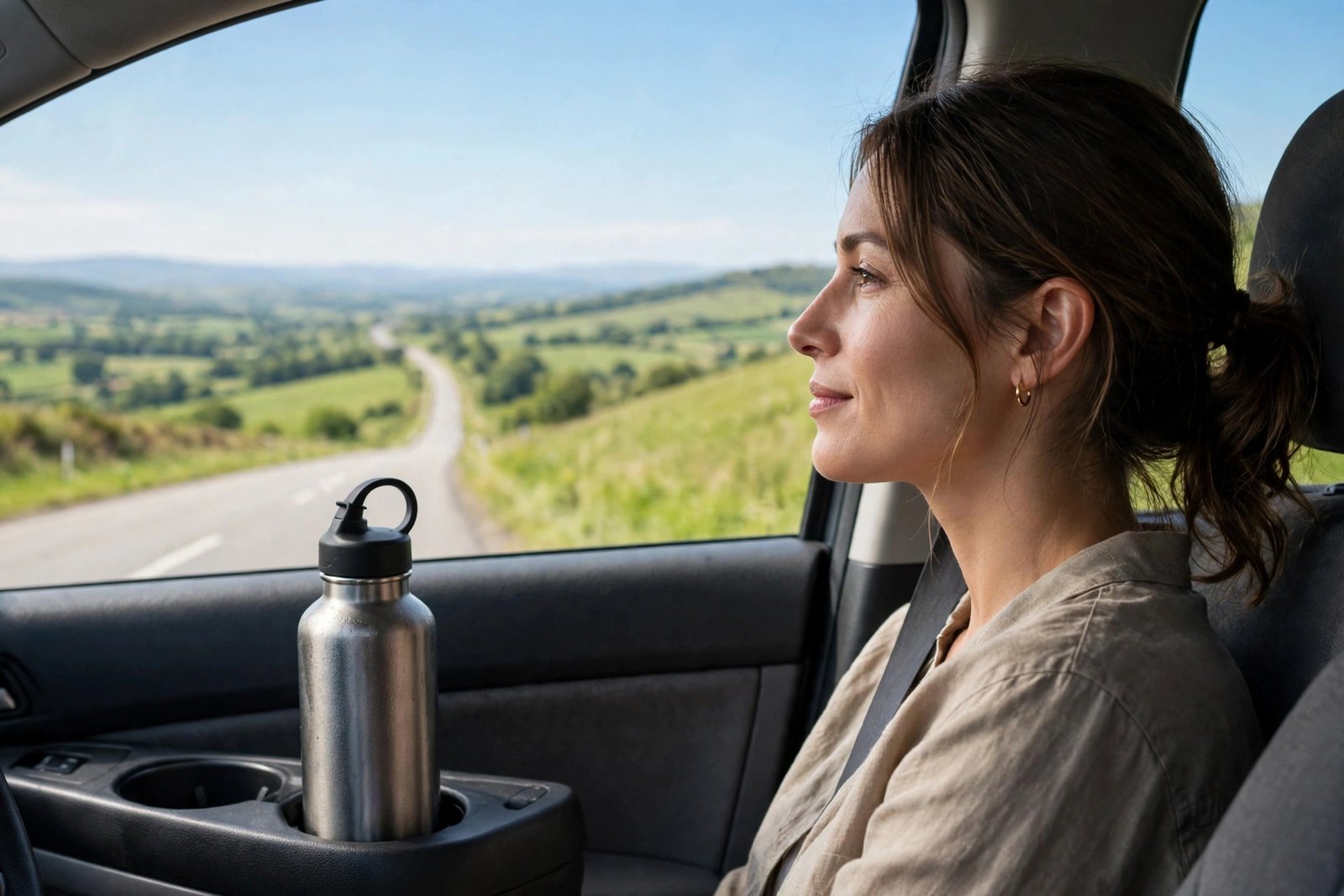
Fresh, cool air helps too. Crack a window slightly or point an air vent toward your face. A stuffy, warm car with strong smells — fast food, heavy air freshener, petrol fumes at a stop — can push a borderline stomach over the edge.
Food, Drink, and Snacks That Help
What you eat and drink during the drive matters as much as where you sit. Small, frequent, plain snacks tend to settle the stomach better than big meals or an empty stomach. Dry crackers, plain bread, a banana, or a handful of pretzels are good choices. Sip water regularly rather than gulping a large bottle at once, and skip alcohol before and during the drive — it can make nausea worse.
Ginger is worth packing. Ginger tea, ginger biscuits, or ginger chews are a long-standing travel remedy, and many travelers find they help settle the stomach. The evidence is not conclusive, but ginger is cheap and easy to carry — just check with a doctor first if you are pregnant or take blood-thinning medication.
Avoid strong smells where you can. If someone wants to eat a hot, spicy takeaway in the car, ask them to wait for a stop — the same goes for strong perfumes and air fresheners.
Quick Fixes When Nausea Starts
Even with good planning, nausea can still creep up on a twisty stretch. When it does, act early — waiting usually makes it worse.
- Tell the driver straight away. There is no prize for suffering in silence. Ask them to slow down, take curves gently, and brake smoothly.
- Pull over and step out. A few minutes standing in fresh air, walking around, and looking at the horizon can reset your senses.
- Cool yourself down. A cool, damp cloth on your forehead or the back of your neck often brings quick relief.
- Close your eyes and breathe slowly. If you cannot look at the horizon, closing your eyes removes the conflicting visual signal.
- Try an acupressure wrist band. These bands press on a point on the inside of the wrist, and some travelers find them helpful. The research evidence is mixed, so think of them as a low-cost extra, not a cure.
- If you do vomit, rest and rehydrate. Take small sips of water once the worst has passed, and wait until you feel steady before getting back on the road.
Helping Kids Who Get Carsick
Children are more prone to motion sickness than adults, and a carsick child can turn a fun family trip into a miserable one. The same rules apply — front-facing seat, eyes on the horizon, fresh air, plain snacks — with a few kid-sized adjustments.
Keep their eyes looking out, not down. Window games work well: I Spy, spotting number plates, or counting red cars all keep a child’s gaze on the world moving past. Avoid books, tablets, and handheld games on winding stretches, however tempting they are. Plan stops every hour or so on a long drive so kids can run around and reset, and keep a change of clothes and a bag within easy reach, just in case. The same ideas work on flights too — see our guide on how to keep kids entertained on a long flight.
Plan Breaks Into Your Route
One of the simplest ways to beat motion sickness on road trips is to stop treating the drive as a race. Build regular breaks into your plan — every hour and a half to two hours, pull over somewhere pleasant, stretch your legs, get fresh air, and let your stomach settle.
Route planning helps too. If a winding mountain pass and a smoother highway both get you there, the smoother road is worth a few extra minutes for anyone prone to sickness. And if the journey has a long twisty stretch, plan a proper stop right after it. A little thought here pays off on the whole trip — our guide to planning a road trip itinerary with multiple stops shows how to space out stops and overnight breaks so the drive stays enjoyable instead of exhausting.
When to See a Doctor
For most people, motion sickness is unpleasant but harmless, and the steps above are enough. See a doctor if it is so severe that it stops you from traveling at all, if it does not improve with the usual steps, or if it comes with symptoms that seem out of place — such as a severe headache, changes in hearing, or frequent vomiting that leaves you dehydrated.
Frequently Asked Questions
Can you get used to motion sickness over time?
Sometimes. Some people find that repeated exposure to the same kind of travel — regular car journeys, for example — gradually reduces their symptoms, as the brain learns to expect the motion. It does not work for everyone, and it is not a reason to force yourself through miserable trips.
Do children outgrow motion sickness?
Many do. Motion sickness is most common in children aged about two to twelve, and a lot of children find it eases as they grow older. Some people stay sensitive for life, though — so it is worth keeping the habits in this article even if the worst years pass.
Do motion sickness glasses or wrist bands really work?
The evidence is limited and mixed. Some people swear by acupressure wrist bands or glasses with liquid-filled rims, and others notice no difference at all. They are inexpensive and harmless for most people, so they are worth trying — but do not rely on them alone. Seat position, horizon gazing, fresh air, and planned stops are the measures with the clearest logic behind them.
Final Thoughts
Motion sickness does not have to decide whether you enjoy a road trip. Sit where you can see the road, keep your eyes on the horizon, eat light, drink water, and plan stops before you need them. Most of all, speak up early when you start to feel unwell — a five-minute break at the side of the road beats an hour of misery in the back seat.