
San Sebastián — Donostia in Basque — is the rare city that does everything well at a walkable scale. You can swim at one of Europe’s finest urban beaches in the morning, eat your way through the old town at lunchtime, climb a hill for a bay view in the afternoon, and be back for dinner in a restaurant that takes its food very seriously indeed. It is compact, beautiful, and easy to enjoy without a car, which is exactly why it rewards a slow two- or three-day visit.
La Concha and Zurriola Beaches
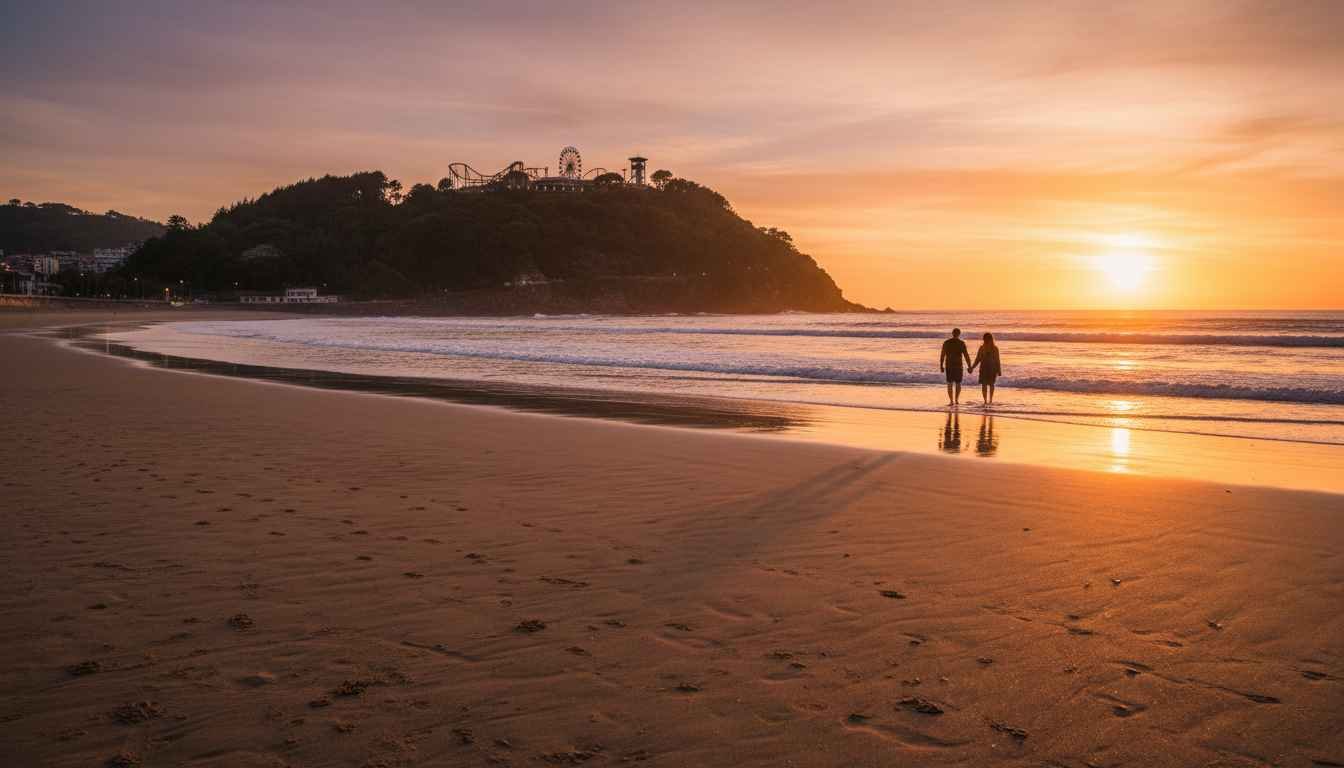
La Concha Bay is the city’s postcard: a wide crescent of sand curving between Monte Urgull and Monte Igueldo, with the small island of Santa Clara sitting in the middle of the bay. The water is calm enough for swimming in summer, the promenade behind it is perfect for a morning run or an evening stroll, and the Belle Époque railings and lamp posts give the whole bay a deliberately elegant feel. Around the headland, Zurriola Beach is the younger, livelier counterpart — the place for surfing, with surf schools hiring boards and giving lessons to beginners. If you only have time for one beach day, La Concha wins for beauty; if you want to learn to surf, head to Zurriola.
Parte Vieja: Pintxos and the Old Town
The Parte Vieja, or old town, is where San Sebastián’s famous food culture lives. Its narrow streets are lined with pintxos bars — Basque tapas, usually eaten standing, one small plate at a time, moving from bar to bar. The unwritten rules are simple: order one or two things per bar, pay as you go, and do not camp at a table. Try the classics — a gilda (olive, anchovy, and pickled pepper on a stick), txangurro (spider crab), and anything with local Idiazabal cheese — and let each bar’s speciality guide you rather than ordering the same thing everywhere. Between bars, look up: the Basilica of Saint Mary of the Chorus, with its ornate Baroque facade, and the Church of San Vicente anchor the old town, and the Plaza de la Constitución, once a bullring, still has numbered balconies from that era.
Monte Igueldo, Monte Urgull, and San Telmo Museum
For views, take the funicular up Monte Igueldo on the western side of the bay: at the top sits a small, old-fashioned amusement park and a terrace with the classic panorama over La Concha. On the eastern side, Monte Urgull is a gentler climb through parkland to a statue of Christ at the summit, with the city’s military history — old walls and a small museum — along the way. Back at sea level, the San Telmo Museum, set partly in a former Dominican convent, is the best introduction to Basque history and culture, with exhibits on Basque identity, language, and art. It is a good rainy-day or midday stop between beach and dinner.
Markets, Modern Architecture, and Day Trips
The Mercado de la Bretxa, near the old town, is worth a morning wander for fresh produce, fish, and local specialities, and it shows you what Basque cooking is actually built on. For modern architecture, the Kursaal Congress Centre — two translucent glass cubes at the mouth of the Urumea River — hosts concerts, the city’s international film festival each September, and cultural events through the year. If you have a third day, the fishing village of Hondarribia, a short bus ride east, offers colourful houses, a walled old town, and a quieter pace, while the txakoli wine town of Getaria lies west along the coast. For more European coastal ideas, see our guide to the best places to visit in Europe.
When to Visit and Practical Tips
Late spring and early autumn are the sweet spots: warm enough for the beach, with fewer crowds than July and August, when the city fills up and hotel prices peak. The city is famously rainy — this is the green north of Spain, not the Mediterranean south — so pack a light waterproof jacket whatever the season. Everything central is walkable, and buses cover the rest, so you do not need a car unless you are exploring the wider Basque coast.
FAQs
- How many days do I need in San Sebastián?
Two days cover the beaches, the old town, and one hill viewpoint. Three days add the San Telmo Museum, a market morning, and a day trip to Hondarribia or Getaria.
- Is San Sebastián walkable?
Yes. The centre, old town, and both beaches are all within easy walking distance, and the hills are the only parts that require any real effort.
- When can you swim at La Concha Beach?
Summer, roughly June to September, is the reliable swimming season. Outside that, the beach is still beautiful for walking, but the water is cold and lifeguard cover is reduced.
- Is San Sebastián expensive?
It can be. Pintxos bars are affordable if you eat bar by bar, but hotels in summer and the city’s top restaurants are pricey — book accommodation early and mix pintxos lunches with one special dinner.
Final Thoughts
San Sebastián works because it does not ask you to choose between beach, food, and culture — it puts all three within a twenty-minute walk. Eat in the old town, swim at La Concha, watch the bay from a hilltop, and you will understand why visitors keep coming back.